
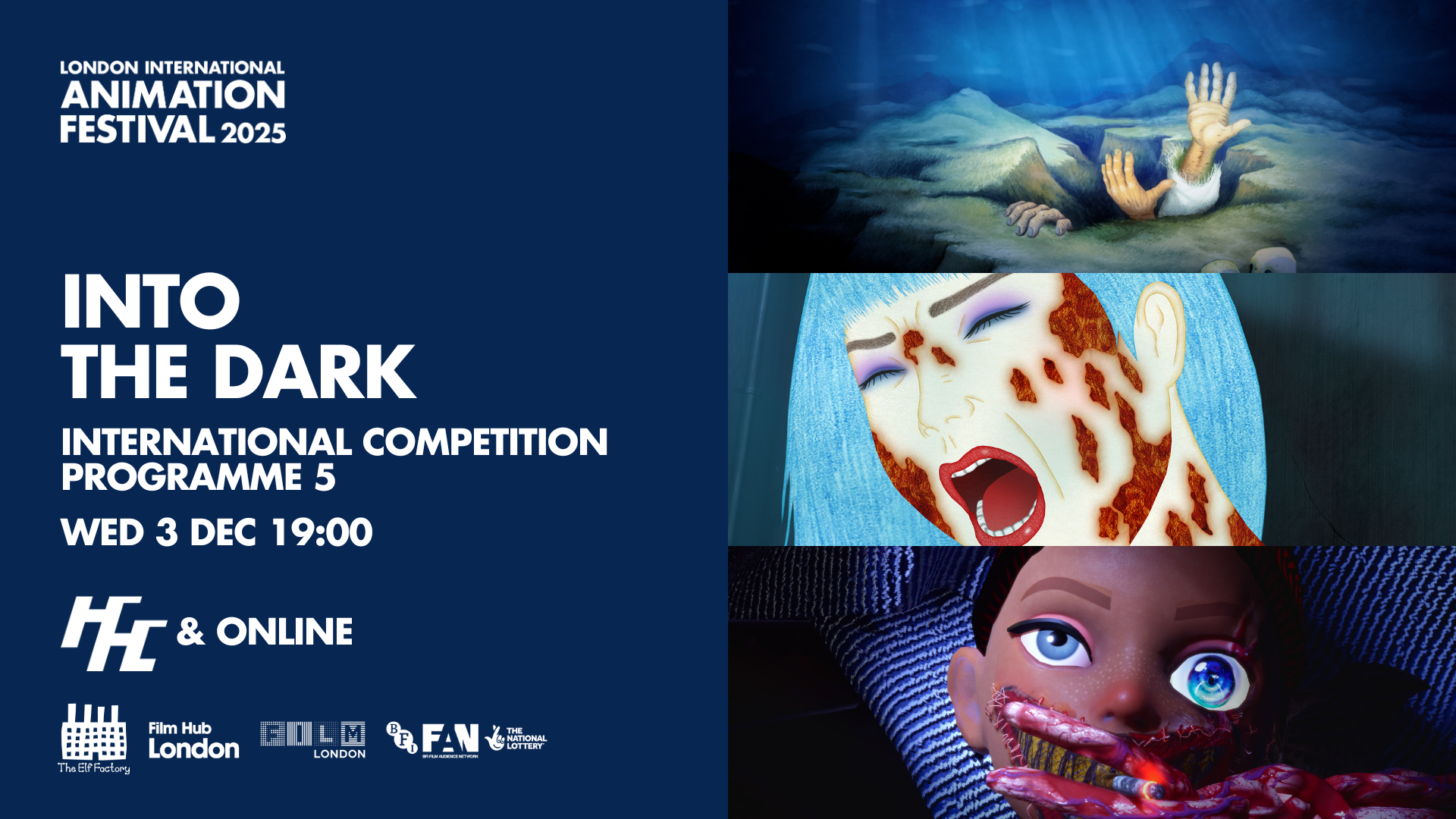
Salon des Disturbance – Teraphobia Stalks The Mindscape
The fear of the monster, the threat of the ‘other’ and a brain hardwired to pivot towards alarm and peril as a priority in times of doubt to help kick the ol’ fight-or-flight engine into top gear straight away is as old as we are; whatever that age may be.
And fair enough. We (probably) know more about how our world works now than we did some-thousands of years ago so lightning, sink-holes and the Wiggles all have perfectly rational explanations for their existence and behaviours although, obviously, it’s still a good idea to give them a wide berth if you can.
In a time when information was passed on primarily through the use of stories, the temptation to inflate the capacities of already frightening animals into the realm of the mythical probably served to enhance the reputation of the storyteller and double-down on the ‘real’ warning that sat in the middle of the tale in the first place.
Then, of course, there just are things that go bump in the night. A child’s mind defaults to ‘terror’ as Option 1 every time – and so a lifetime habit can be born in which constructed solutions hold the high ground on the explanation hierarchy and begin a conversation in our minds joining dots that don’t – that can’t – exist. And because they are constructed from scratch without the constraining limitations of reality to keep them within check they are free, if not supercharged, to take on a vividness that only an imagination can craft.
To some extent, most of us will have some experience with this cycle, especially in childhood. It’s a natural part of growing up and settling a still-developing brain. But for some, it reaches into the realm of a recognised phobia; to be precise – Teraphobia. By some counts (and, fair call, I’ve gone for the upper end of the published scale) more than 7% of the population have this phobia. The same sources point to studies that suggest a propensity for it to run in families (calling Dr Freud – Dr Freud to the front office please) but for the most part if any cause can be identified it tends to be an encounter with a specifically frightening image, video or – my favourite – “someone in a costume”. For now, we’ll leave delving into ‘coulrophobia’, ie. the fear of clowns, but let’s keep the cue card in the rolodex for a later day coz there’s some rich pickin’s in that basket.
Once made and embedded in the memory, phobic or not, these monsters can be difficult to excommunicate from the mind which is, on balance, the bad news. The good news, on the other hand, is that they can be put to work as source material for amazing stories (if the requisite skills happen to be co-inhabitants) or as a ready dark sponge that, despite the electric shocks to the system it sends out when engaged with, sits as a surprisingly willing receptor for the kind of stories, characters and situations that form our deepest fears.
It’s surprising how ‘collective’ some of these horrors can be. In 1950’s America there was a spike in UFO sightings and movies that insinuated a sly, unrelenting attack by the terrifying, unstoppable ‘other’ – “Invasion Of The Body Snatchers” being the alpha-example – which were both symptoms of, and responses to, a rising social concern that somehow ‘the communists’ were taking over. Fast forward to 1999 and a film called “The Blair Witch Project” rose out of indie-nowhere to grip the imaginations of a generation who were just starting to become familiar with what felt at the time to be absolute revolutions in the portability of video recording devices.
It goes without saying that animation is an astonishingly good vehicle for creating films that have a dark vision baked into their souls. The unique properties of animation are custom made to craft tales that twist reality, blur borders and bend and mould the vapours of extreme ideas into an apparition that is far more dream and hallucination than any rendition of reality. This, unsurprisingly, is more or less the modus operandi of every film in our “Into The Dark” programme this year, a veritable roller derby of disturbance and contorted corporeality.
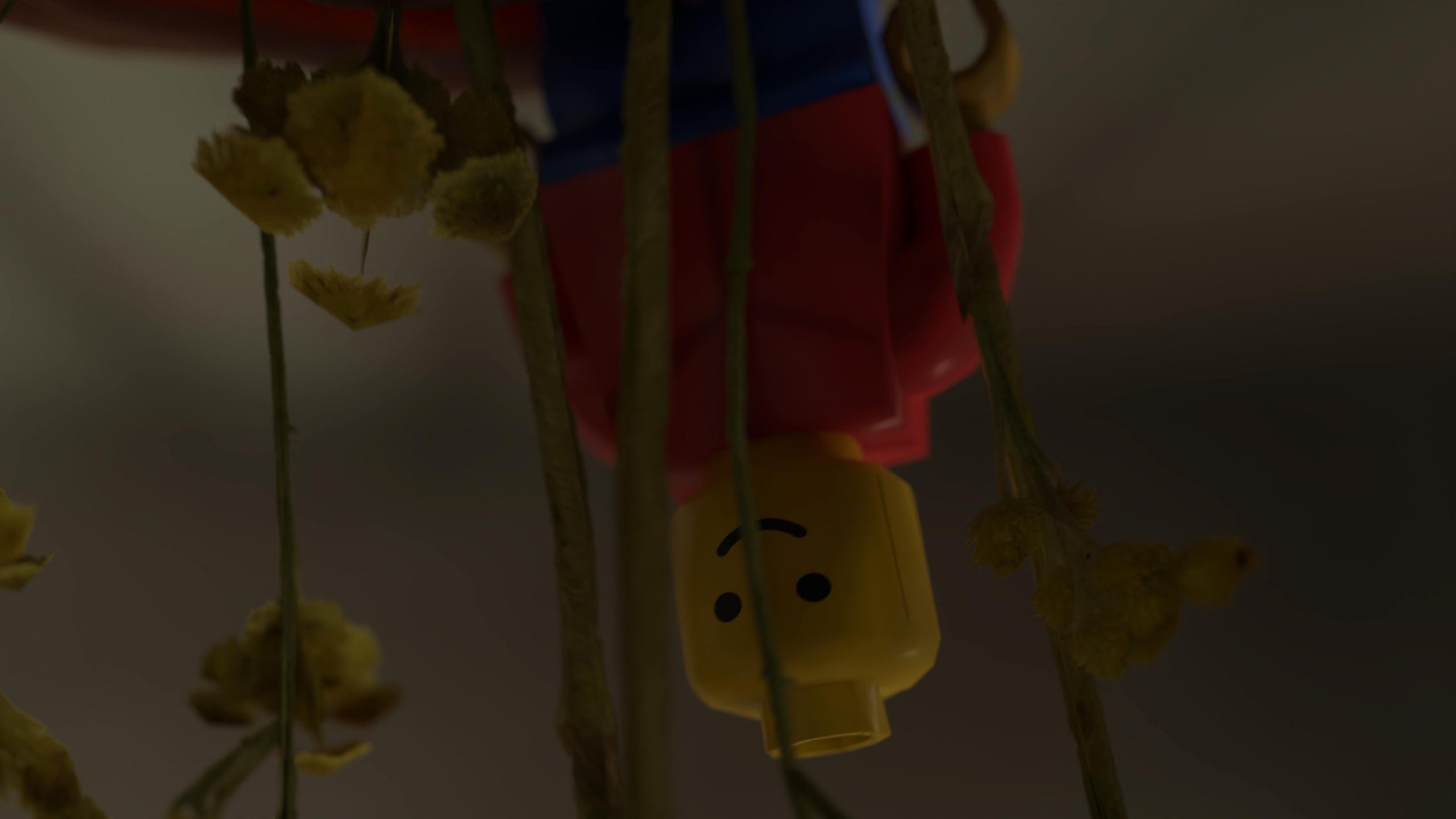
The programme hits the ground running (literally) with its opening film, Overture by Jakub Hronský. At face value, it’s built around a simple and kind of unrelenting premise but there’s a visceral ‘realness’ to the damn bug that stars in this film and whatever demented mission it is on. Moreover, the close ups on this creature are a window on a grotesquery that is surely more of a capture-grab from an imagination in turmoil than a semblance of real life – as realistic as it appears to be. Conclusions about what mission the bug is really on are hard to come by and in some ways it would probably be even more unsettling than the state of suspended imagination we are left in here.
Having pock-marked your minds with one-insect-gone-rogue film, we lock that mal-apparitional subgenre in with another. This time there are actually humans involved but it doesn’t take them long to realise they made a mistake turning up. At 18+ minutes, Joe Hsieh’s Praying Mantis uses every second of it to parade an ever-evolving nightmare before us. There isn’t really a ‘jolt’ moment here, more an unyielding, slow-burn evolution of cruelty inexorably edging towards a conclusion that will catalyse in an aspic of horror. It takes a lot to get something like Praying Mantis as right as it is: that relentless but disciplined pacing, the feel of anime without tipping it into that genre, the layers of the characters behind the story being peeled back like an onion skin…. Hsieh hits the mark every time.
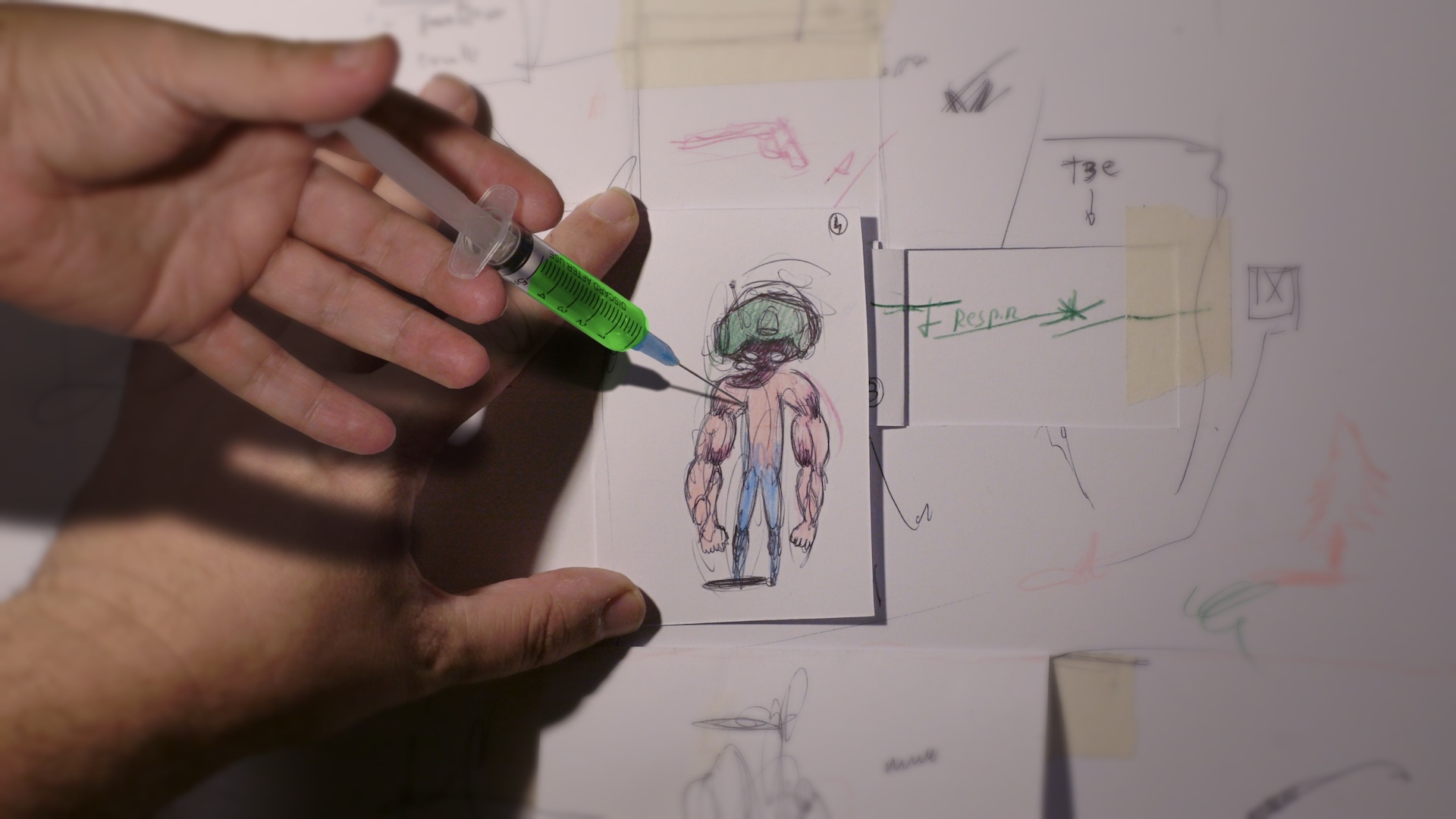
Ahhh, Donato Sansone! It’s always a good day when a new film by this high energy, high impact Italian animator hits the LIAF in-box. This year it’s a film called Dark Globe and it is vintage Sansone. He works in a number of techniques and has two or three quite different signature styles but Dark Globe rocks the same aesthetic (and technique) as past gems such as ROBHOT, Journal Anime and especially Videogioco. Its trick de resistance isn’t really the art or the technique, it’s really the plotting of the action, the flow of all the mad movement (drawn and ‘real’) and kicking into gear the kind of mind that can make all of this happen in the way that we see it roll out in what appears to be – or feels like – a sort of semi-constrained random chaotic stream-of-consciousness come to life. Could you draw this stuff? Maybe. Can you see the ‘mechanics’ of how Sansone has pieced the film together? Yep, it’s right there in front of your eyes, nothing is hidden? Could you imagine making this all roll out as it is here? Hmmmm…. not unless you can think like an animator!
So what’s going on with Colombian animation? I’ve been asking this question for a while now whilst observing the rise and rise of a small but incredible cluster of superb Colombian films annually issuing forth. Having now watched The Devil Room by Duban Pinzón I’m now not as sure I want to know. The entire premise of The Devil Room leaves no room in the house for anything other than the darkest of dark visions. The fact that it is beautifully crafted in a kind of grimly elegant black and white only heightens the whole effect. Although things are going bump in the night here, very little is hidden in the shadows of dark. And as horrifying as the situation being portrayed here is, that isn’t really the scariest part. What helps really get this film under your skin is the way most of the core characters simply accept their reality as if it were just a bad version of normal.
If you’ve asked the question ‘Is it safe to go back into the forest yet?’, Fia by Luciana Martinez probably has the answer. ‘Not yet, my friend, not yet’. Admittedly the little beast you would meet in the forest Martinez has created for Fia seems more intent on hurting itself than anything else, but why take the chance. What a year for stop-motion, and especially puppet animation, this has been. We have a showcase dedicated to the form and even that isn’t enough to contain the flow. And one of the hallmarks of much of the puppet animation we are seeing this year is the incredible craft that has gone into making the puppets themselves. Craft that is of a type and quality that allows the camera to get in really, really close. And “Fia” is Exhibit A. It is not just about the detail contained on the surface of these puppets that allows for this (important as that is) it is the sheer magnitude of the ‘life force’ these puppets seem to contain. These things don’t just look like they are real and alive, they ‘feel’ like they are real and alive. And when they are sent about the kind of grim business Martinez sends our nameless anti-star on, the impact is all the more immersive and the conclusion, when it arrives, all the more absorbed by us.
“As I stood at my grandmother’s funeral and listened to the dull thud of the hard earth hitting her coffin, I imagined our family portrait. We were exhausted people of strange proportions and vacant gazes – as though we were a naive painting from Podravina. In the centre of that picture was my grandfather, a once abandoned child”, writes Maida Srabovic, the director of Facuk, a film that takes its title from the Kajkavian term for ‘illegitimate child’. This burden placed on an innocent child made no sense to Srabovic who set out to understand the long-ago abandonment of her grandfather from the perspective of his mother, her great-grandmother.
Srabovic knew that the naïve art, central to the culture of Podravina, the part of northern Croatia that her family came from, would be central to not just the look of the film she wanted to make but key to the way the story would be told. And so it proved to be. It was when she encountered a painting called ‘The Pit’ by Mijo Kovacic that all the key pieces fell into place. “The moment I saw it, I immediately felt the inner suffering of the protagonist in the film”, says Srabovic. “Mijo’s images began to intertwine with the script, building the inner world of emotions and trauma.” This complex mix of real story and cultural inspirations are key to more fully appreciating the nuances that flow through Facuk in often unpredictable patterns.
Back in the day, ghost train rides were a staple attraction offered by any even half self-respecting fairground. There is an absolutely brilliant book by Guy Belshaw called ‘The Ghost Train’ which offers a superbly illustrated history of some of the most fabulous examples of this attraction of yore. These days they tend to come across as a kind of combination of old-school industrial art kitsch and rickety mechanic intrigue. There are still a few of them around but they sell themselves (if they sell themselves at all) as a mix of silly nostalgia and downright comedic distraction. Making them is a long-lost art. The obvious explanation is that, simply, tastes have changed as have the relative sophistry of the audience (an argument with some contestable holes in it, but let us not digress…. one horror at a time). If you want a front-row, blow-the-mind, burn-the-retinas example of what a ride on a ghost train might look like in this day and age then step-right-up one-and-all, have I got a ghost train for you. It’s called Underground Invaders and it’s eight and a half minutes of undiluted, grisly hell-on-earth animation unleashed by a French animation team out of the Ecole Georges Melies. As Hunter S. Thompson was prone to say, “buy the ticket, take the ride”. No refunds!
Annnnnd, just coz we can, we are ending the programme with The Exploding Girl by Caroline Poggi, and Jonathan Vinel. You need your eye protection and hazmat suits on good and tight from the first frame of this one. It is a brilliant example of a simple but great idea taken to the farthest reaches of its own galaxy. In it, a young woman has succumbed to a condition in which she spontaneously explodes two or three times a day (her record is seven). Although never fatal and not without leaving behind a few marks that look like they might take a while to heal, she more or less reforms in the immediate aftermath of each detonation, often the wiser for her experience. This is a character who wears her heart (and one or two other bits and pieces) on her sleeve and much of her wisdom, often oblique but poignant, has a saddened acumen to it that we should possibly contemplate as it slowly blows past us, least we miss the quiet astuteness of how her loss hints at the ways we can let life slip by us if we spend too much time staring at our phones instead of out the windows. As brilliant as the core concept of The Exploding Girl is and as astonishing the animation that brings it to explosive life appears, the real brilliance is in the writing and the messages we might each be able to take from it all.
“To all of you who expected to explode but never did….. you’re so lucky”.
Malcolm Turner
International Competition Programme 5: Into the Dark screens at The Horse Hospital Wed 3 Dec and online from the same date (available for 48 hours)















Leave a Reply
You must be logged in to post a comment.