
“What’s this little boy doing here?” exclaimed ex-President Theodore Roosevelt, looking down across his portly countenance at a lone 14 year-old boy scout who, until a moment ago, had been expecting Roosevelt to pin a medal on him, as he had with the other nine boys who had lined up on the stage to receive the honour. The scoutmaster, who had clearly miscounted the number of medals to be handed out, instead ignominiously bundled young Ted Geisel off the stage.
Ted Geisel went on to become one of the most successful and beloved children’s authors of all time, selling countless millions of books under the name Dr Seuss. A popular, fairly outgoing fellow in person, he developed a pathological fear of speaking in public, something he put down to this humiliating moment in his youth.
Around such moments an emotional landmine of this nature can change the DNA of a person’s soul – emotions are powder kegs. Invisible and thinner than vapour, their expression and repression are the ghostly lifeblood of our real selves and our interactions with others. We see them as we see wind – by their effect; the trees they knock down and the windmills they turn.
Arguably, the greatest early chronicler of ‘classic’ American literature was D.H. Lawrence. His ‘Studies In Classic American Literature’ was published in 1923. “Trust the tale not the teller” was Lawrence’s snappy opener. It’s unlikely he meant this entirely literally. He was trying to bring to the world’s attention a body of work that, for the most part, the world had little real knowledge – and even less understanding – of at the time. And to do this he had to bring to the fore the collective emotions that drove so much ‘modern’ American writing.
In ‘Terrible Honesty: Mongrel Manhattan In The 1920’s’, author Ann Douglas makes the point that first and foremost Lawrence wanted the writers he was focusing on (among them Franklin, Poe, Whitman, Cooper, Hawthorne and particularly Melville) to be understood as “great modernist writers ahead of their time, and he did this by demonstrating their uneasy, uncontrollable, and profound expertise in the life of the unconscious,” she writes. Douglas goes further, offering that Lawrence had “discovered in classic American literature a map of the ‘primitive’ psyche of the Western world.” To linger in the most urgent centre of this mission is to step onto an uncertain highway of emotions as they blaze past seeking destinations and resolutions.
The risk is in taking this too literally and getting oneself bogged down in the more mundane chores of figurative interpretation. Douglas herself was plenty aware of this, writing that it was time to “pull off the idealistic clothes of American utterance” and “see the dusky body beneath.” Lawrence’s heroic tome – utterly definitive of its age – arrived before Hemingway was getting up to speed and, all things considered, it’s probably for the best that he never had to grapple with the contributions of Hunter S. Thompson which may have delivered a set of ‘emotions-too-far’ for Lawrence’s sensibilities.
This aesthetic arm wrestle for our attention between the invisibly inferred and the observably representational is nothing new and is certainly not confined to those trying to reach the emotional core of ‘classic’ early 20th century American literature. It is, actually what drives so many artists of almost every stripe. One of the most complex, confounding and ‘unboxable’ performance artists of all time, Joseph Beuys is but one, albeit brilliant, example.
Beuys biographer, Heiner Stachelhaus, records that Beuys, “once said that it was a good idea to describe what one saw; this was the way to get into the realm of what he meant. Even guesswork was all right, because it set something in motion, but one should resort to interpretation only ‘in emergencies, or for educational purposes.’”
If all of this is to mean anything; if any of this is to be something worth trying to ‘consume’ at any meaningful level, surely the filaments in our mind that are tuned to receive and interpret the emotional broadcasts of the world we live in are the primary receptors here, not our eyes and not the vassal zones of our minds that have been hollowed out to trap ‘the real’ as it floats by us.
William Burroughs once (probably more than once) said “All pictures are faked.” Cultural commentator extraordinaire, Peter Conrad, dragged this Burroughsism into the bright light of day writing that what Burroughs was talking about here were painted pictures which are faked because “they deny our temporality and our temporariness – but pictures that move have a unique capacity to show us what time looks like as it passes.”
They were both talking about ‘film’ but they should have been talking about animation which is – by a measure – the ultimate carriage service for this invisible and weightless freight…. emotions. ‘Film’ will almost always want us to ‘understand’ it – animation often doesn’t even set out to try and achieve that. To dig deepest into the ethereal world of emotional depiction you’re gonna need an animator. We’ve been looking around and we’ve found a few that have been busy of late.
We ease into the programme with The Taste Of Pineapple Bread by Manfei Li. Pineapple bread, a popular staple of Li’s native Hong Kong is so-called because of its rounded shape and the cross-hatched cuts that texture its crust – there’s no actual pineapple in it. Li shifted to Switzerland with her family when she was 12 years old and this, her masters film at the HSLU Lucerne School of Design, Film and Art, is a skilful and beautifully restrained blending of everyday lived emotions plied gently and lovingly into a remembered place. It also quietly speaks volumes to a kind of cross-generational emotional exchange which can be a conduit for jagged dissonance or – in this case – a magic carpet ride of connection across a plethora of divides. The culminating scenes of the film would have to rate as among the most affecting of any we are screening at LIAF this year.

Ultra Strong by Catherine Lepage kicks the jams out from underneath the programme though. As many of us know all too well, high school is not for everybody. Roiling and turbulently unsettled emotions can blend with multiple unmapped searches for an identity that will somehow allow us to fit in. Throw in the frustrating mystifications of trying to reach some sort of equilibrium with one’s own gender and the powerful, relentless messaging of imaging that pours out of every media outlet there is and you have all the makings of a lost half decade. Early on, Lepage decided to go in hard, prioritising heavy metal to lay down the tone for the journey and to flavour the multiple tangoes of sub-committal behaviour. The Iron Maiden poster on her bedroom wall sets the scene for the journey and, thus, guiding her through the whack-a-mole panorama of this period of her life is the sage advice of Maiden’s front man Bruce Dickinson… literally!!! Yep, Lepage reached out to the real Dickinson who came on board to voice his animated character delivering what seem like simultaneously random and focused nuggets of encouragement at key crossroad moments in the film. No spoilers – the film can speak (and yell) for itself – but don’t turn away when the credits roll coz you’ll miss a terrific gallery of 80’s era ‘big-hair’ head shots of the film’s key people, including National Film Board producer Christine Noel …. which is a real treat for those of us that have been hanging around the animasphere for a year or nine.
One of the interesting things about growing older is a mounting realisation that you have a lot more memories than a helluva lot of the people around you. In the first half of your life, most people in your world have experienced most of the same stuff, give or take, that you have – most of us tend to take this sense of ‘shared experience’ for granted. But that ratio of shared experience (and the memories those experiences generate) diminishes exponentially as each calendar gets replaced. My back-of-the napkin calculation is that only about 20% of the people in my world have lived through the range of things I’ve lived through. And a second but related observation is that one of the things I’ve seen change is our relationship to photographs. The cost and the protracted logistics of producing photographs in the dimming past gave them a lo-fi sacredness that is hard to fathom now. It tended to bestow a certain importance on a photograph – which it may or may not have deserved – but its very existence took effort on the part of multiple people and that ‘weight of effort’ mingled into the emulsion of the image. Both of these….. let’s call them small ‘p’ phenomena form the alchemic nutrient stream that flows through Black Box by Anton Dyakov. And his brilliant use of a black and white palette only multiplies this to an emotional plane it might have struggled to reach in living colour.
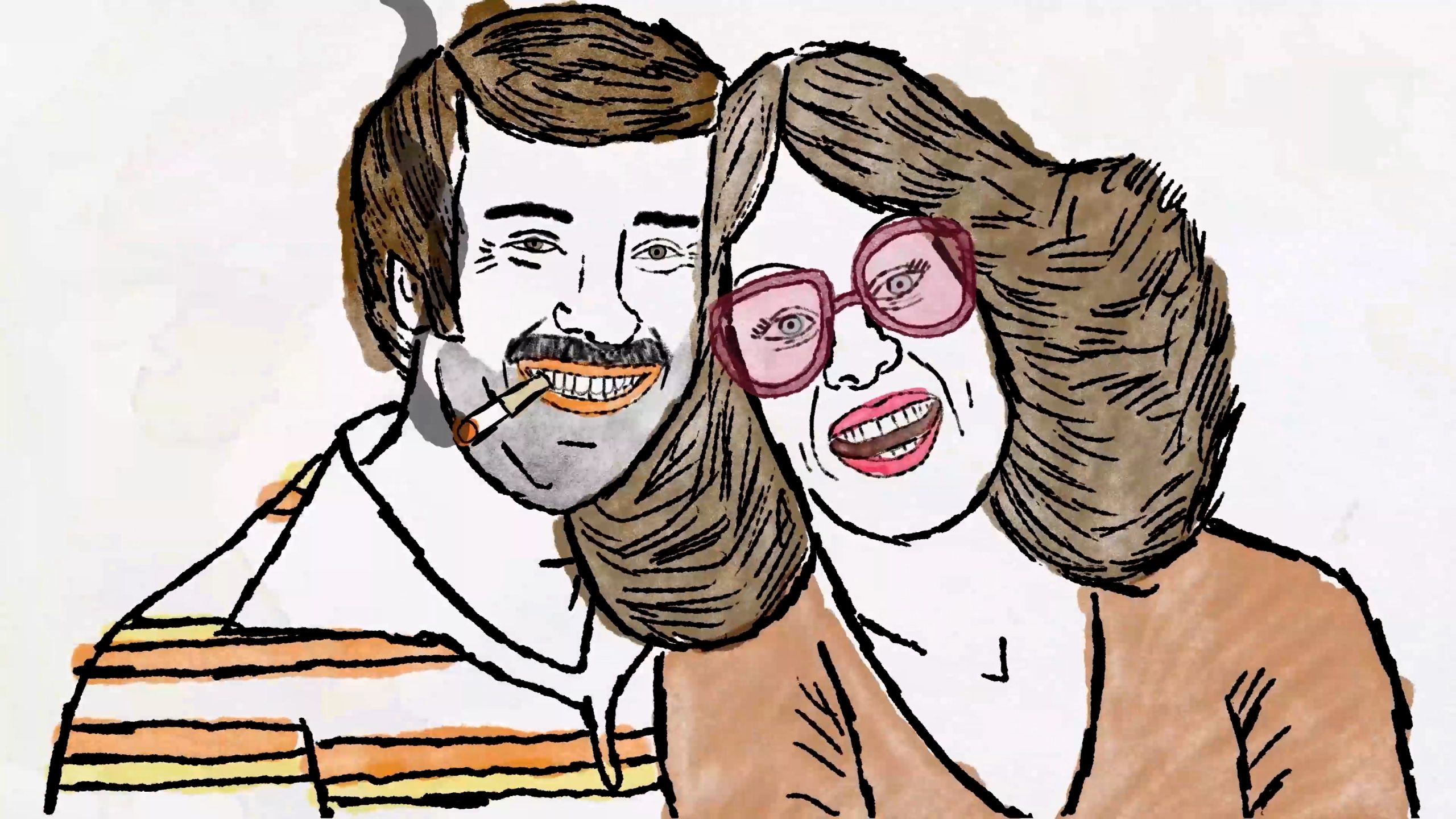
Annnnd speaking of memories from bygone eras……… the London’s are back!!! Over the years I’ve visited Andy and Carolyn London a few times at their various homes in New York. They’re terrific company and never happier than finding some ‘off-colour’ idea to convert into an animated film. A lot of their work draws deeply from the well of biography so I’m almost too afraid to ask where the ideas for their latest film 1981 came from. It’s set in 1981 and centres around a 14 year-old boy’s birthday, the teenage raucousness of his group of friends and some decidedly fascinating parenting ideas (not to mention dress sense). There is nothing more that can be said about the story that won’t give the game away here BUT on the off-chance you were around and functioning in 1981 it is – story aside – a terrific trip down memory lane with museum-grade research delivering a glorious abundance of touchstones of the era. The London’s always bring their A-game to the field when they deliver a new film but even for them 1981 is London Squared.
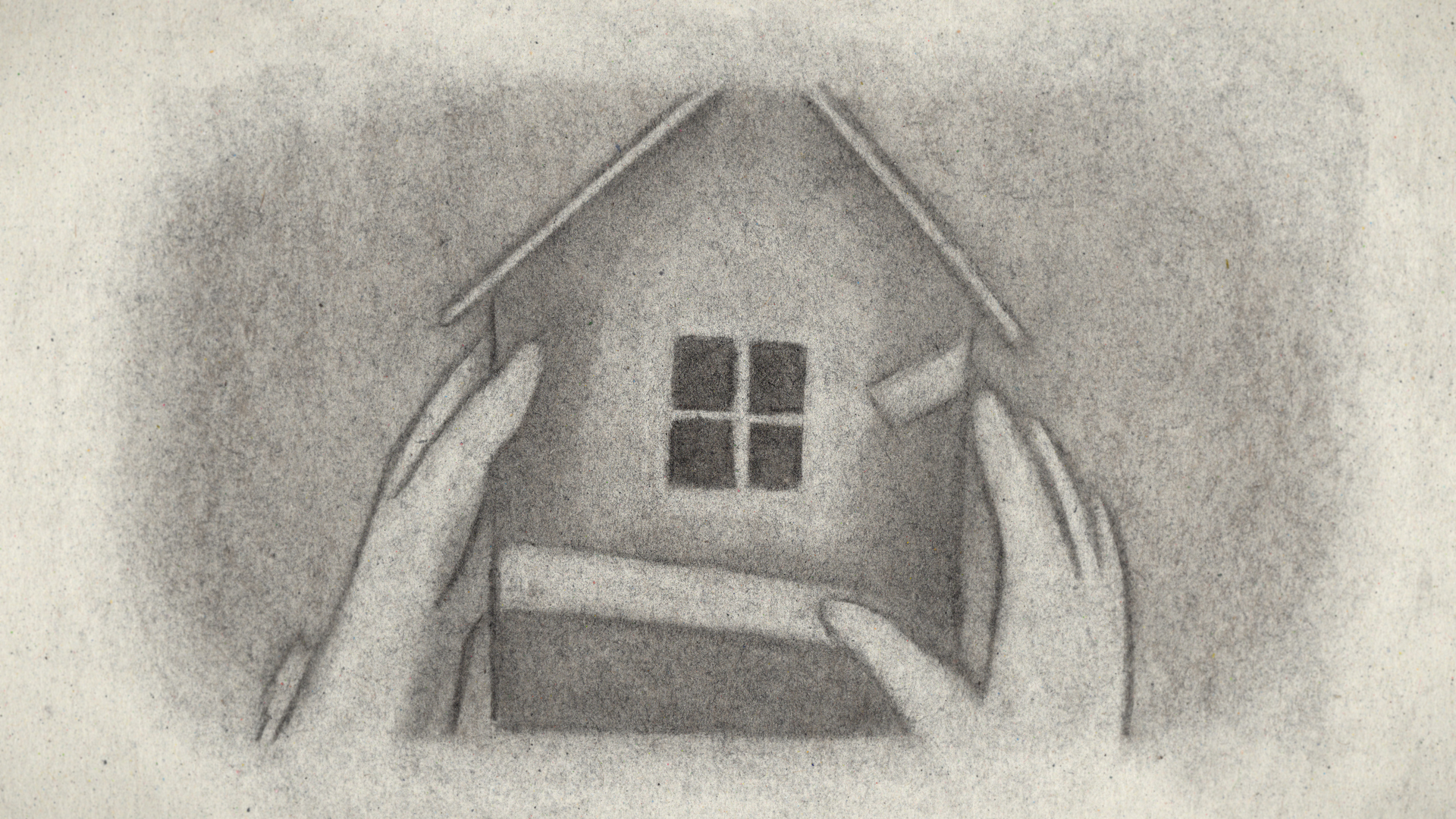
One theory has it that humans arrive at birth already clutching the bag containing the cluster of diamond-in-the-rough emotions that will shape their personalities and determine the way they will interact with the world and so – this theory goes – the parent’s role is to polish those stones so as to smooth off the edges most likely to do the cutting and make the most precious of the jewels sparkle as much as possible. The problem that sometimes arises, however, is that while some homes use soft rags and Windolene others reach for sand paper and metal files. Jamaica Kindlová’s film Gently brings a softly vivid lens to the moment-by-moment-by-moment lived experience of being a small human who is being mis-sculptured in this way. Gently is a lot less about the physical viscerality of this experience and far more a visual chronicle of the relentless procession of moments that wind up pasted onto the many pieces of the jigsaw that gradually reveal a full-scale, ready-for-the-world human being.
We send you out into the night with song on your lips and love (or least hope) in your heart with the closing film Please by Anna Mantzaris. How really ‘in jail’ are you if you’re there hugging a dog you love more than life itself on the outside? Would church attendance increase if sermons rolled with an element of cathartic performative destruction embedded in their sub-holy exposition? Is a proposal of marriage to a reluctant and possibly doubtful beloved more or less likely if you burn the street down in the process of making it? Just how many times do you squeeze an emotional response you want to have into an increasingly fragile plastic storage bag before the thing bursts under the pressure and releases not just those emotions but the compressed remnants of you into a world that suddenly has the space to reinflate your soul to what it always had the capacity to be? And how do you know if you left it too late to find out? Or, hell, did you ever just wonder what it would be like to be jabbed repeatedly in a butt cheek with a medieval pike being held by a knight in armour? Only felt puppets (and absolutely gold standard foley) can even hope to pull this off but in Please, Mantzaris not only brings ‘anima’ (the ability to bring life to the otherwise inanimate) to this cast of strange little dolls, she might also just have delivered up a little extra for you and I to take home and try as well.
And, thus, off into the night we go.
Malcolm Turner
International Competition 2: Playing with Emotion screens at The Garden Cinema Sat 28 Nov and is available online from the same date (available for 48 hours)
ABOUT ONLINE TICKETS
Watching in the UK? Select ONLINE TICKETS UK
Watching outside the UK? Select ONLINE TICKETS OUTSIDE UK
Want huge savings with an online pass? Select ONLINE PASSES
Our CURATOR PASS grants you EIGHT tickets for just £39.
Our VIP PASS grants you 1 ticket for all THIRTY online programmes for only £79!
You can browse all our online programmes here.

















Leave a Reply
You must be logged in to post a comment.