
I spend a lot of time wondering about abstract animation in a fairly abstract way.
Well, maybe not in an abstract way…. more of a haphazard, meandering, old man wandery kind of way. Lotsa pieces, not so many pictures. Lotsa thoughts, not so many conclusions. Lotsa thinking, not so many answers.
Ten or so years ago, to help bolster my impending centenarianism and to keep me off the streets I began getting entrusted to teach graduate project animation to students who often had no idea as to why or how they should make a whole stand-alone animated film. I was able to convince exactly zero of the 800+ students I have encountered within that realm to contemplate an abstract animated film as a graduate project. Nada! And perhaps that might be for the best because in so many ways the structure of the courses overseeing these projects – and especially the marking guidelines for the checkpoints and finished product – would make it impossible to actually award an abstract film with a grade that reflected its quality. Up to 40% of many grade lines are given for ‘story’ – an irrelevant metric to apply to an otherwise outstanding piece of abstract animation.
Admittedly that’s a localised result but in 30+ years of programming animation for a whole range of screen events I’ve seen precious little (not none but precious little) abstract animation come out of any tertiary animation course regardless of the continent. This ratio stands in stark contrast to the abundance of abstract animation festivals such as LIAF receive through our submission processes.
In Australia where I live, two of the more artistically successful and international acclaimed abstract animators (Paul Fletcher and Dirk de Bruyn) have recently retired from long careers as revered animation teachers in two of Melbourne’s more important tertiary animation courses. We’re talking about a couple of people with something like a combined 40+ years teaching animation and a combined ‘gawd-knows+’ years making the stuff that have, nonetheless, never overseen an abstract student animation graduate film.
Remaining in Melbourne for the moment, the Victorian College of Arts (where Paul Fletcher taught for close to 30 years and where I still teach) is situated directly opposite the National Gallery of Victoria that has shown significant collections of abstract art. On the other side is the Buxton Contemporary Art Gallery which often celebrates abstract art and a five minute walk away delivers one to the door of ACCA, the Australian Centre for the Contemporary Art which presents little else but abstract work. Visible from the windows of another university I work at in Melbourne are at least three extremely important dealer galleries who consistently display abstract art – often with eye-popping price tags attached.
A recent late-night, on-line purchase subsequently delivered unto my post box a trove of ‘Artforum International’ magazines in excellent condition and for a fraction of their original cover price. I do subscribe to their on-line archive but there is just something more wonderfully engaging about being able to flick through the real thing. ‘Artforum International’ is an astonishing publication, bringing a monthly window on the international art scene in a compellingly compiled and presented package. Wandering through this stack I was struck by how much abstract art filled the pages; a good 25% of the work reviewed or written about is abstract and at least a third of the glossy ads for exhibitions, galleries and publications from all over the world spruik abstract art – probably more.
Eight such articles got bookmarked for closer reading in the January 2025 edition. The first on offer – for the sake of example – discusses the ‘art-language scores’ of Wadada Leo Smith who uses his musical compositional skills as a stepping off point for his abstract ink and paint artworks. The article quotes Smith as saying that he labels these works as “Ankhrasmation – a portmanteau combining ‘ankh’ (the Egyptian hieroglyph for ‘life’), ‘ras’ (the Amharic/Ethiopian term for ‘head creator’ or ‘leader’), and ‘ma’ (a sound associated with mothering the world).” This sounds like an astonishingly apt and utterly relevant recipe for creating the DNA of an abstract animation to me. Perhaps not as clear a synopsis but a waaaaaaaaaay more interesting one than ‘boy fights dragon, impresses girl, sits with her to watch the sunset’.
Several issues carried prominent – and incredibly fetching – advertisements for various exhibitions created by William Kentridge, the South African animator (among other skillsets) responsible for the classic and critically important 9 Drawings For Projection series of short animated films which channelled the perspectives of its pro/antagonists Soho Eckstein and Felix Teitlebaum to document South Africa’s history of apartheid. These exhibitions included aspects of Kentridge’s imagery from his films, but they mainly focus on engaging dioramas of completely abstract art. Kentridge, by way of passing comment, was also the designer of the life-size horse puppets in the phenomenally successful stage production War Horse.
The September 2025 edition alerted me to the passing of the iconic American film and culture critic P. Adams Sitney. This prompted me to fish out my much-thumbed, slightly crumbly copy of his book ‘Visionary Films’. I’d forgotten how lucid a chronicler he was of – among others – the critically important abstract animator Harry Smith, arguably the godfather of VJing.
The common thread of these random wanderings along the windy and windy abstract art pathway of life is that ‘abstract art’ is all around us, all the time, ever present. It hides in plain sight, cropping up in everything from high rotation commercial marketing campaigns to stuff jammed into a bunch of old dead-tree readable relics that I had somebody ship to me in the middle of the night. And yet there are precious few outlets outside of LIAF that really celebrate abstraction in animation – and I reckon that says less about how marvellously amazing we are (although…. ya know….. we have our good days here at LIAF HQ) and more about how the gods have somehow conspired to mask the beauty, benefits and unique authenticity of abstract animation. Abstract art has a profile within the overall visual arts world that is not even close to matched in ratio to the appreciation of abstract animation in the animation world. It has always been thus and probably will always be – but trying to move that needle won’t be for a lack of trying by us. So, let’s step forth with open, hungry minds and take a look at LIAF 2026’s Opening Competition Programme – the Abstract Showcase.
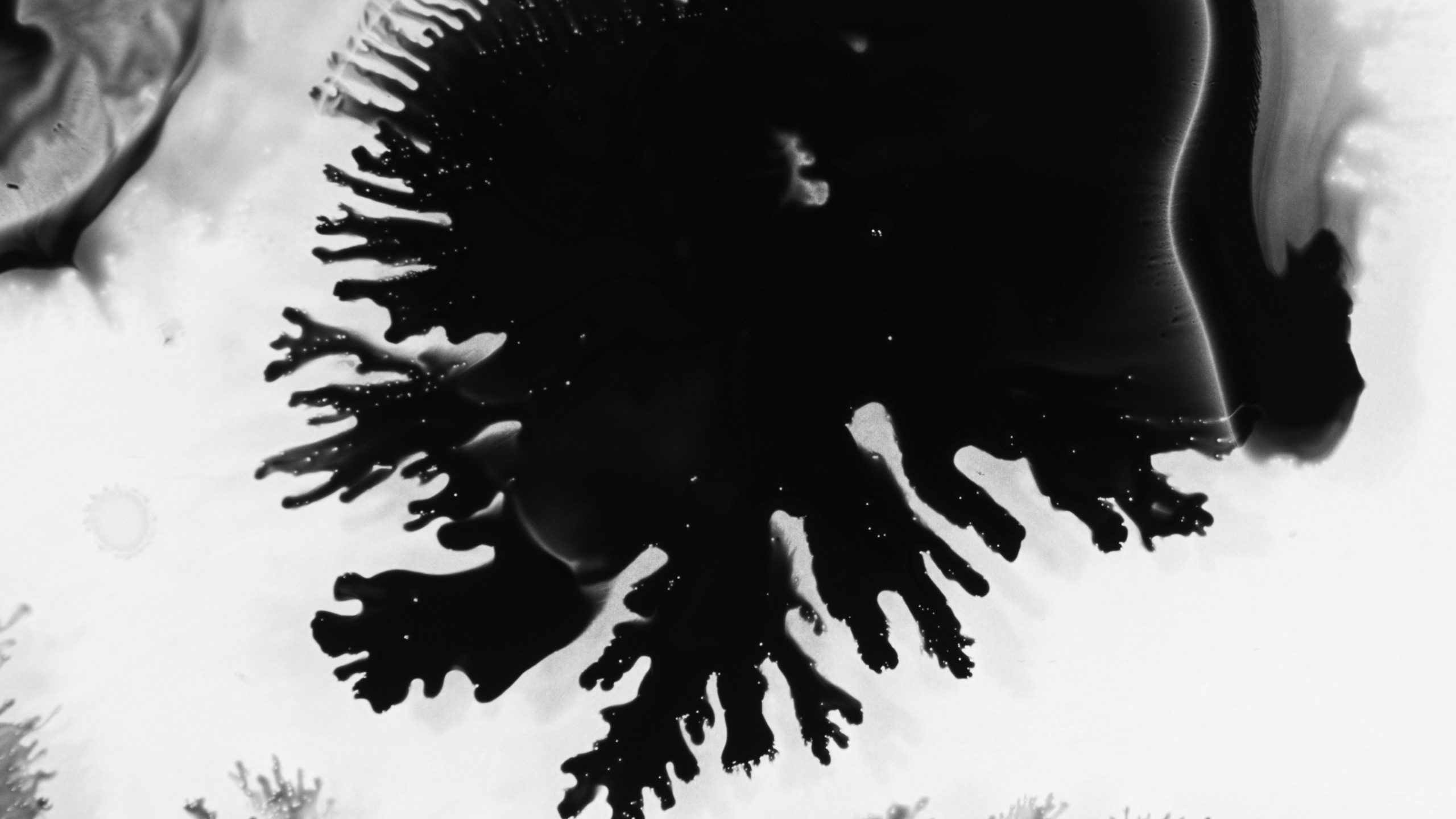
The programme wastes no time limbering up or rolling out a gentle entry – we barrel straight into business with Witch Piss by Vienna trained fine arts exponent Vera Sebert. It is the kind of film that lays down a boldly clear and aesthetically confident gauntlet from the get-go which is precisely why it is the opening film here. Last month it also featured in “Experimental 1: Tong(ue)s Slips”, at the ever-courageous Lausanne Underground Film & Music Festival which turned out to be one of the more provocative expeditions into abstract and experimental filmmaking in recent months. Perhaps I’m channelling too many lost days in an earlier iteration of that once great city San Francisco, but it immediately reignites a wild batch of half memories that suggest being driven through a smart, inner-Coney Islandesque screamsphere of ever-changing fragment environments, with a compromised vision palette gripped by a half-tripping functionality trying to grasp little pieces of comforting micro-realities as they blurt in and out of visible consciousness. The bigger meaning, of course, lies in not what you know you can see but how this helps rewire your capacity to think about how it might credibly coalesce as a statement of altered reality. I’ve watched it close to a dozen times – I have a few theories but I’m still working on it.
Happily shredding my whine above regarding the shortage of abstract animation emerging from tertiary institutions is Yuki Kimura’s gloriously inventive, engagingly infectious film Element#02. It’s her thesis film, made at the Tokyo University of the Arts and is a grand example of a kind of ‘happy place’ abstract animation can take you to. Kimura’s summation of the film is that it “explores where the human pleasure of tracking moving and glowing objects come from, investigating our primal fascination with following shiny things with our eyes” which sums up the deliberately joyful essence that pours off the film. Her incredible colour-sense – a wonderful talent in its own right – plays strongly to these qualities in the film as well.
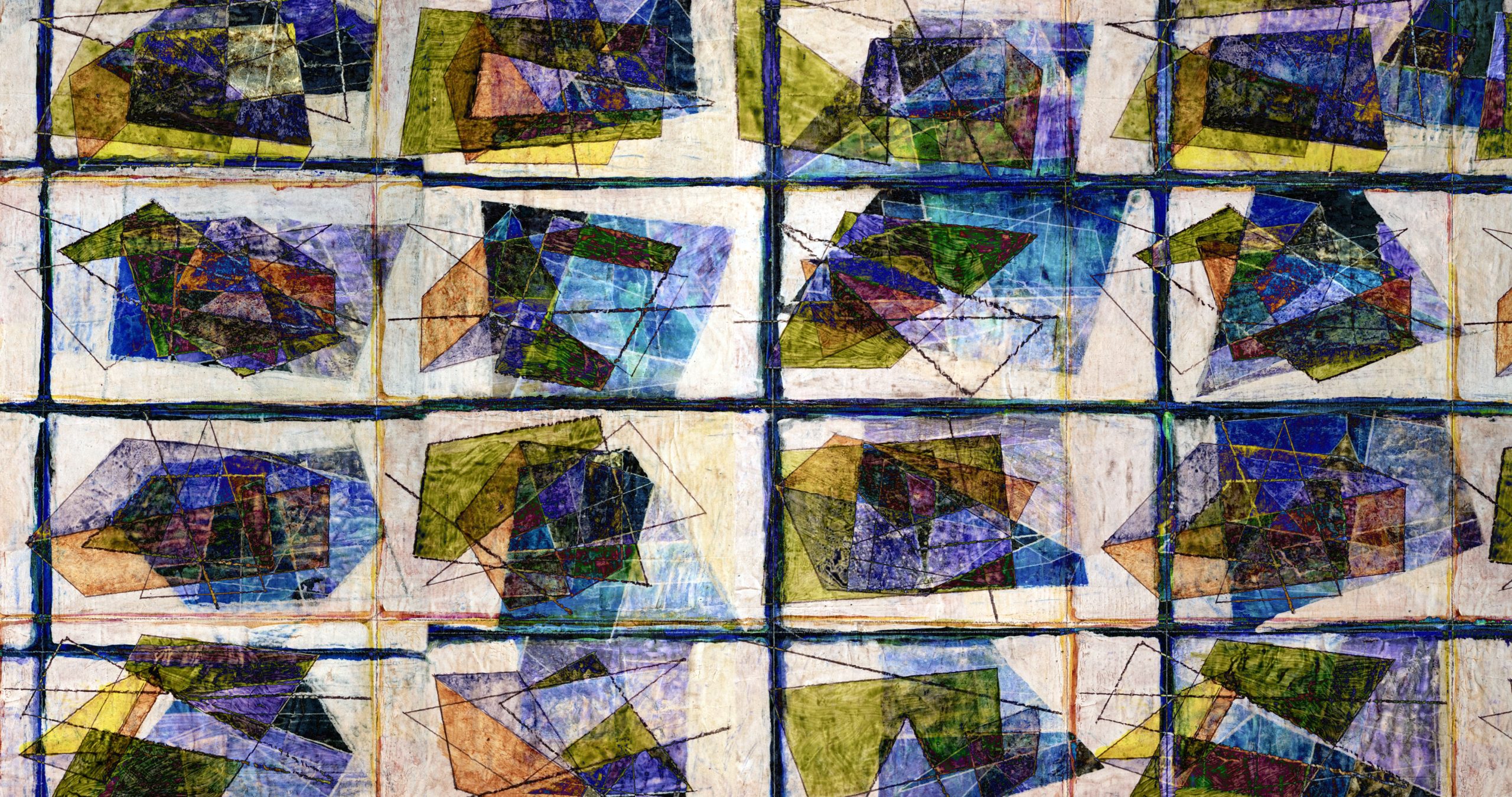
Doubling down on my whine above about how many great abstract animators are teaching in great courses comes Steven Subotnick’s latest film Impromptu. Subotnick has trained at least a couple of generations at the highly regarded animation school in RISD, the Rhode Island School of Design. Impromptu is as handmade as animation gets. The film’s journey began without a clear destination. Subotnick had a series of squareish wooden boards that he wanted to use somehow. His initial impulse was to draw grids on them and paint abstract imagery in each of those gridded rectangles, shoot the result under camera, repaint the boards, re-shoot and so on. But as beautiful as the result was, initially Subotnick struggled to find a ‘reason’ for the film – a purpose at its heart. Out of the blue he was contacted by the Borealis Wind Quintet who were looking for an animated accompaniment to a commissioned piece they were creating. “When I put my board animation with the music it just immediately seemed to work,” says Subotnick. The boards needed further refining but, essentially, Impromptu was born at that moment.
It’s wonderfully surprising and utterly not surprising at all to be screening a couple of films from the outstanding production and distribution company, Bonobo. There wouldn’t be many years LIAF has not included work from Bonobo, and the studio supremo – Vanja Andrijević – has both an astute eye for outstanding animating talent and an equally astute capacity to bring together the teams that bring the best out of any given project. Subharmonics by Marcell Mostoha and Symbionts by Quirijn Dees are both outstanding and self-assured steps into the world of abstract animation for Bonobo, having in common an intensely crafted soundtrack that invigorates and expands the visuality on offer almost into a dimension in front of the screen.
Probably the single most interesting thing I saw all year last year was Animateka Festival’s five day deep dive into pinscreen animation. Back in 2006, LIAF was thrilled to present Canadian pinscreen animator Jacques Drouin who introduced his films, especially Mindscape, one of the most beautiful films ever made and, arguably, the ‘definitive’ example of the genre. Pinscreen films – unsurprisingly – require a pinscreen upon which to make them. The largest of the original pinscreens was created and used by the founders of the technique, Alexandre Alexeïeff and Clare Parker. Sadly, it had deteriorated in storage and was thought to be more or less lost. In the early 1970s Norman McLaren organised a substantial pinscreen ‘seminar’ at the National Film Board of Canada (NFB), inviting Alexeïeff and Parker to share their skills with a who’s-who of NFB filmmakers. His hope was that it would not only preserve the skills required to make the films but galvanise the NFB to invest in making some of the actual pinscreens; the manufacturing process itself being an arcane and little known artform. It worked to the extent that a tiny handful of people (mostly at the NFB) have made a small number of pinscreen films over the years and the NFB has been the custodian of pretty much all the functioning pinscreens in existence ever since. The biggest of these ‘devices’ house (literally) more than one million tiny pins, each in its own sheaf and each able to be moved back and forth as required. The future of pinscreen animation was thought by most of us to be intrinsically linked to its past. But Animateka’s exhaustively researched showcase tore up that assumption. In fact, the original Alexeïeff/Parker pinscreen has been rescued and restored to presentation standard (alas, the damage was too profound to allow its 1,100,000 pins to be used for filmmaking) and a couple of people have taught themselves the forgotten art of pinscreen making, albeit producing pinscreens of a smaller dimension and with larger pins (thus reducing definition) than those of Alexeïeff/Parker and the NFB eras. But pinscreen animation is back!!!
One of the people who re-developed the art of making these is South African Diek Grobler. When I talked to him at Animateka last year it was pretty clear he was excited not just to make pinscreens and pinscreen films but put pinscreens within reach of any filmmaker who wants to try their hand. His film Pictures For Piano (1) is an outstanding example of the mustering of shade and light that controls the visuality of pinscreen films – and beyond being a highly engaging addition to this year’s Abstract Showcase also stands as a siren call to all animators regarding the unique possibilities of the pinscreen as a pathway to creating animated imagery.
The programme ends with a subtle, delightfully playful film rejoicing in the title Wandering Dot And The Blank Square Page Universe by Latvian artist and animator Ieva Lība Ratniece. It’s another film that shoots down my earlier observation about the paucity of abstract films made at tertiary institutions, having been completed at the KASK school in Belgium. There is a wonderful textural granularity that is the most consistent through-line in a film that otherwise wrangles in a myriad of materials from which the film is constructed. Ratniece’s motto – “follow your curiosity, despite your fears or doubts” – is probably the most illuminating light that can be shone down the pathway this film takes us on but her advice to contemplate it as a ‘visual poem’ opens up not just a link on how to think about her film but a broader definition of what fuels so much abstract animation.
All up – it’s been a GREAT year for abstract animation. Believe us when we say there is plenty more where this came from – and it’s worth seeking out!
Malcolm Turner
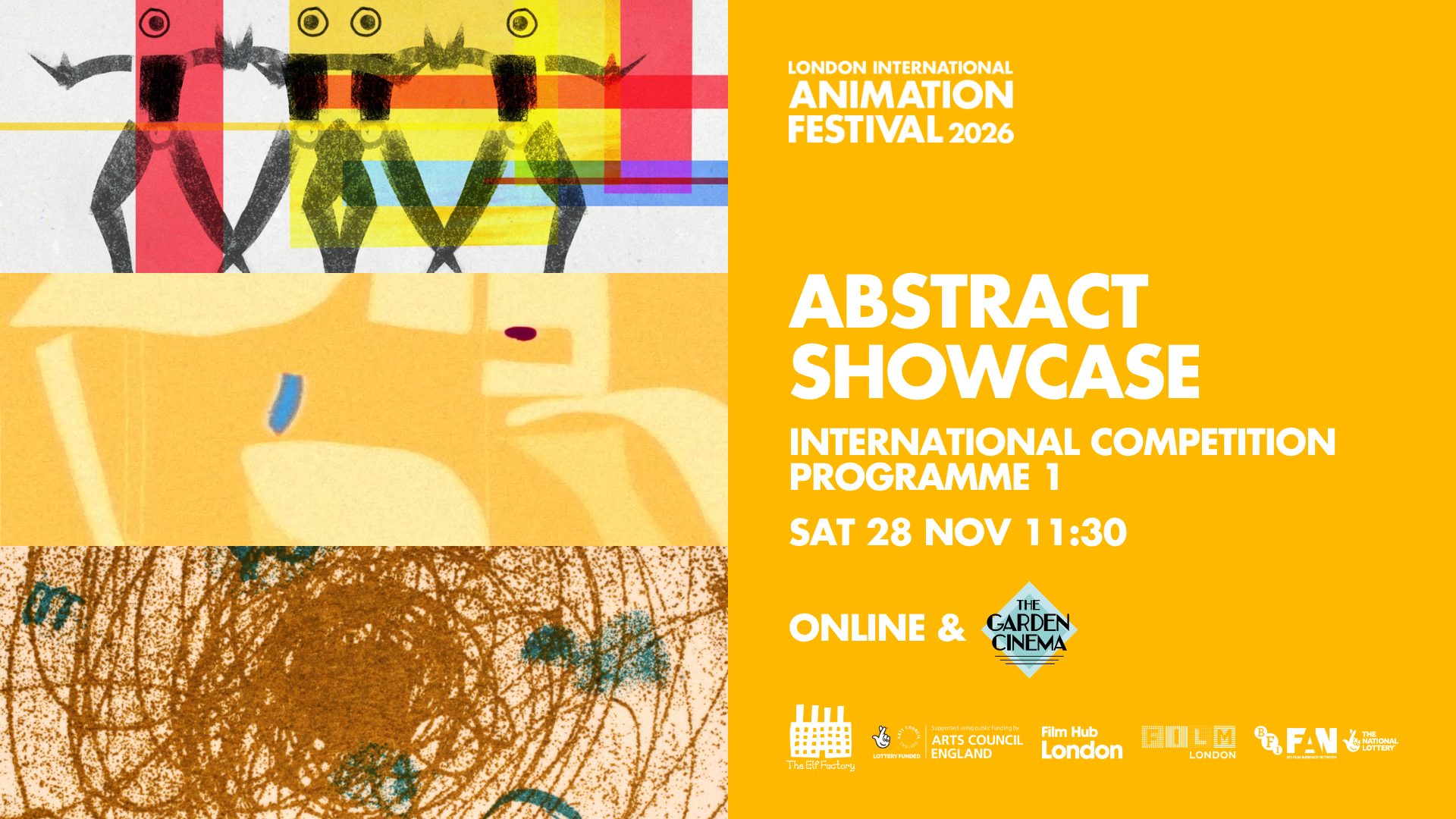
International Competition 1: Abstract Showcase screens at The Garden Cinema Sat 28 Nov and online from the same date (available for 48 hours)










Leave a Reply
You must be logged in to post a comment.