
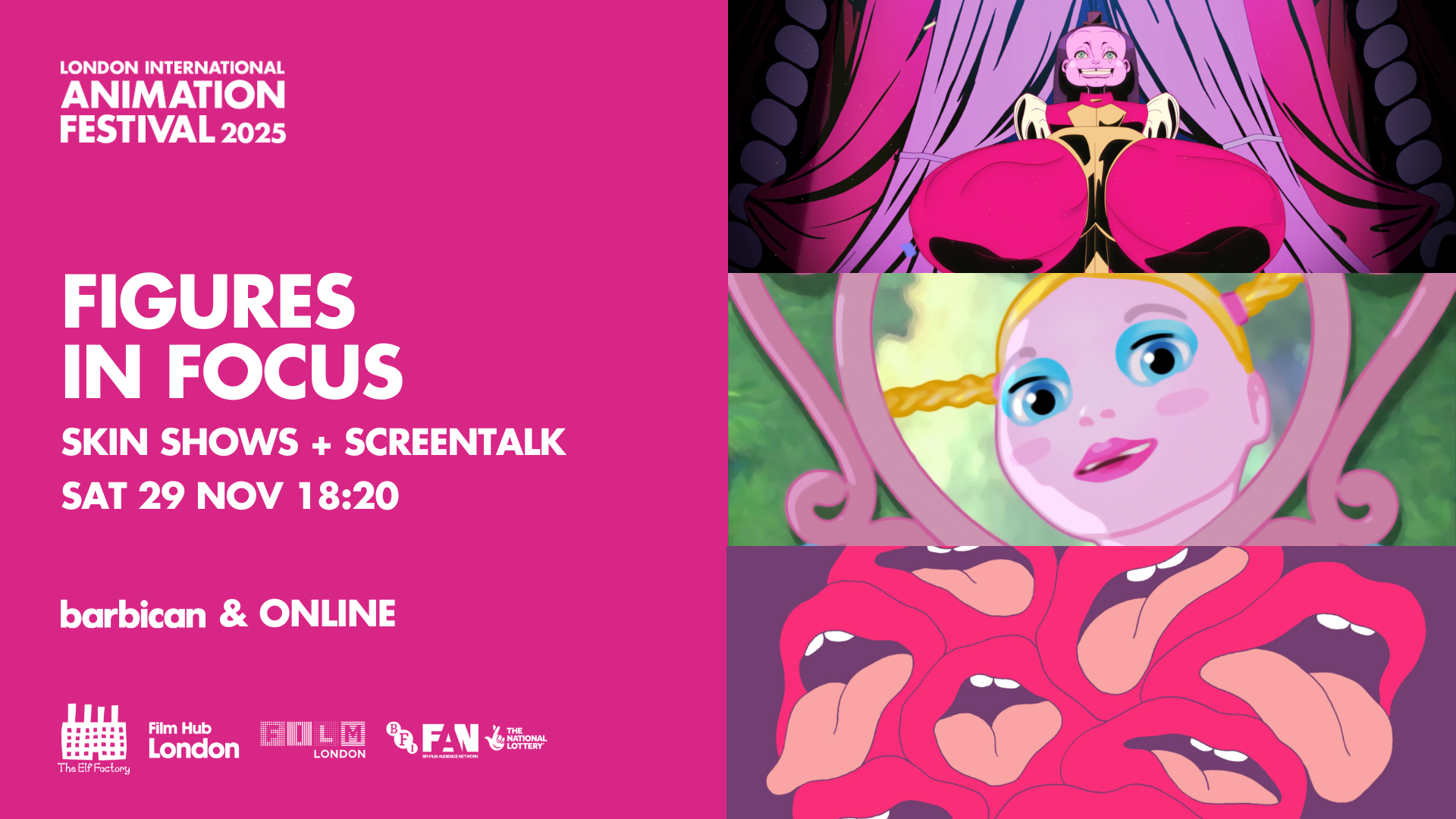
With this edition of Figures in Focus, the title ‘Skin Shows’ is a nod to Jack Halberstam’s excellent book of the same name; a work that explores gothic horror, monstrousness, corporeality, otherness, and its representation in contemporary film. In this programme the perspective of the female body as grotesque, abject, and perverse is interrogated. These films show that getting under the skin of this conceit can be empowering rather than horrifying. These animators boldly lay bare sexuality, queerness and the body on screen.
We begin with the satirical fairytale that is La Fée des Roberts (The Boob Fairy). Creator Léahn Vivier-Chapas conjures an outrageous mythical figure who bestows young girls with enormous breasts. We’re presented with a world where hyper-femininity is the only way to be and this missive is passed from one generation to the next. The grotesquery of this shallow aesthetic desire plays out in parallel with the circus lion dressed in a tutu and forced to perform in a caged arena. Mother painfully makes up her face and puts on her wig before she even goes to comfort her child, the laborious ritual of femininity. The glorious character designs show exaggerated features, curves, lines, lips and breasts of the exquisite, monstrous beings on screen. The Boob Fairy is us, judging the female form, demanding a perfect, sexualised form. An imaginary character that is symbolic of our fixation with how physical attributes define what a woman is.
In May Kindred-Boothby’s The Eating of an Orange, a pristine young woman dances a conformist dance of her peers in a monochrome world. She is introduced to the delights of a forbidden fruit by an older woman. The orange is natural, fragrant, juicy, messy, exotic. The act of eating unlocks hitherto unknown desire and pleasure in the girl. The fruit of knowledge – here an orange rather than an apple – takes the girl on a solo sensory journey to a vibrant place of sensation and freedom. As she penetrates the skin of the fruit she sheds her clothes and her nakedness betrays that something sensual is opening up within herself, a new found knowledge through self-pleasure. When thinking of an orange it is hard not to recall Jeanette Winterson’s seminal queer fable ‘Oranges Are Not the Only Fruit’ and whether here it is subverting the orange as the symbol of heteronormativity to a sign of queer joy.
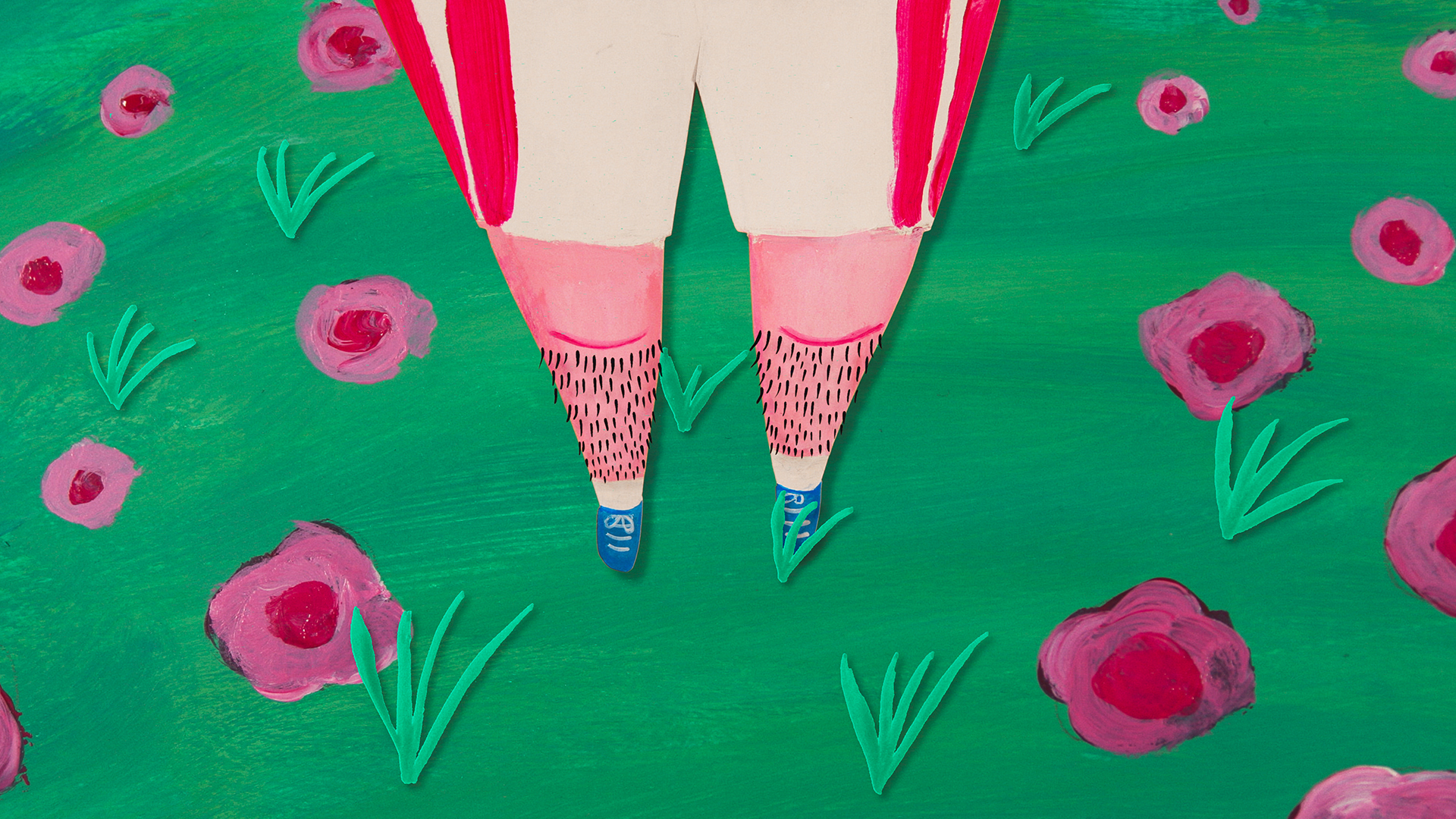
Andrea Dorfman looks back at her own history with body hair in Hairy Legs. She reflects with humour on how coming of age in the 80s it was expected to shave one’s legs as a teenage girl. The radicality of this small act of defiance and the way it was received understandably led Andrea to question the societal pressure to conform to this gendered norm. She considers where she fits, trying to join with the others who choose not to shave their legs – the sports players, the activists, the hippies. She finds comfort in the words of Simone de Beauvoir: ‘One is not born, but rather becomes a woman’. (A sentiment that runs through many of the films in this programme.) Finding strength in her feminism in the face of the pressure to acquiesce and shave. The physicality of the paper cut-out and paint delightfully adds to the sense of the physicality of the bodies on screen.
Laura-Beth Cowley explores the idea of menstruation as a time when magical powers gather strength in The Gift. The film reframes this bodily function, which much like body hair is still seen to be shameful, and reclaims it as a site of supernatural power. Here in this horror filled short, the story parallels an ancestral witch harnessing this gift and with a person in the modern era finding this strength within. The environmental design hints at the protagonist’s potential sorcery with an interior filled with candles, symbols, herbs, trinkets and goats. There is a nod to an iconic horror film about witches on a post-it note. The film celebrates the menses as a positive rather than a site of shame or revulsion. The red blood a symbol of something to be revered; a gift rather than a curse.
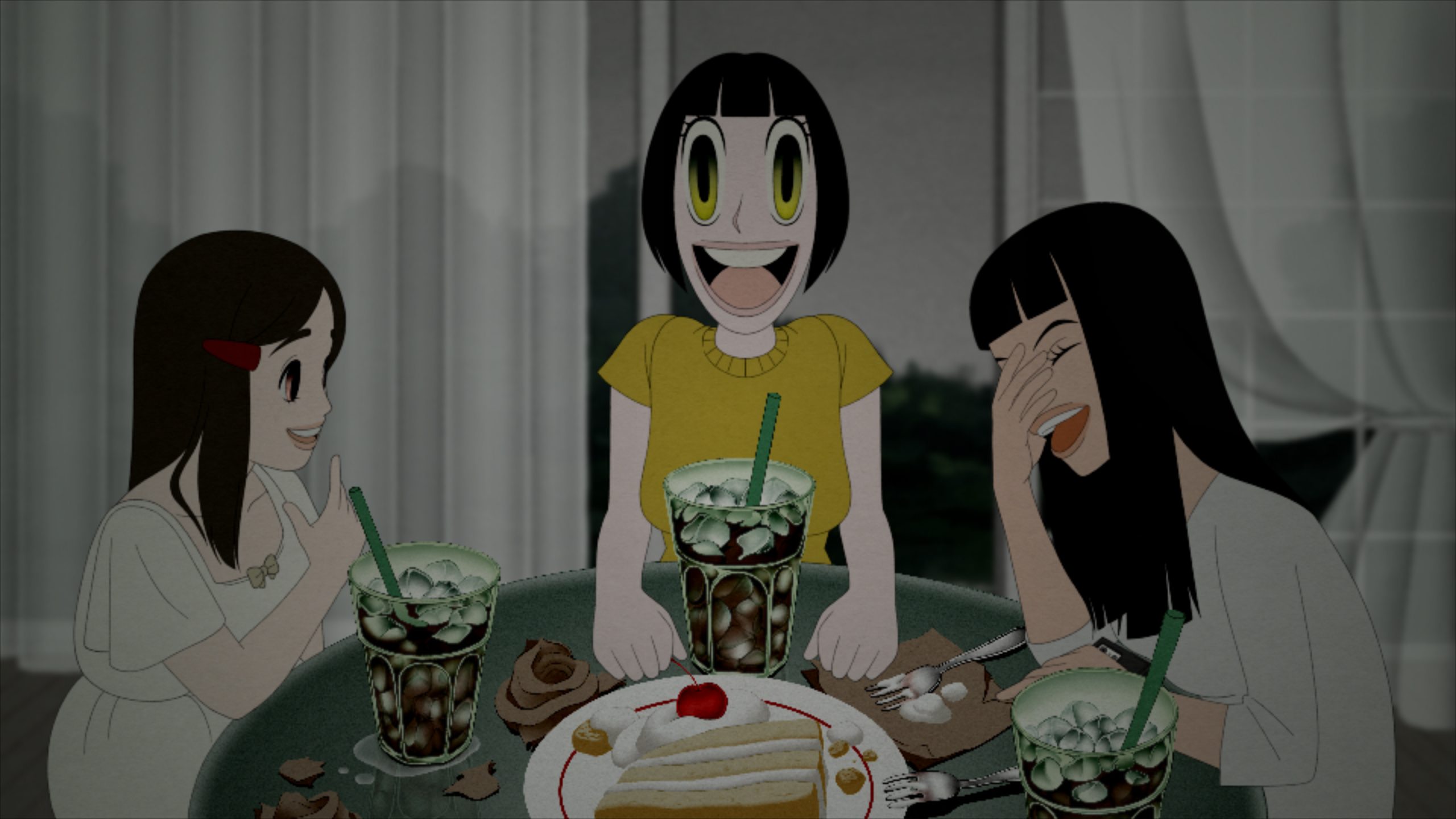
The ordinary character of Sujin Moon’s Persona takes to wearing a grinning, uncanny, skin suit to appear acceptable to peers. The detailed drawings, muted palette, and sparse soundtrack draw us into a world that feels suffocating. We see the protagonist sitting naked and dutifully washing the sexy, female, skin suit at the start before awkwardly slipping into it to go out and meet with friends. The suit serves as a physical boundary between the interior world and the mundanity of the real world; the fake skin a bold device, much like the digital avatars we all inhabit. The friends appear to her first as faces coming out of the smartphone, which constantly beeps. In person, they all perform for one another and the camera a sweet, girly routine. Everything feels empty and anxiety-inducing in this surreal short.
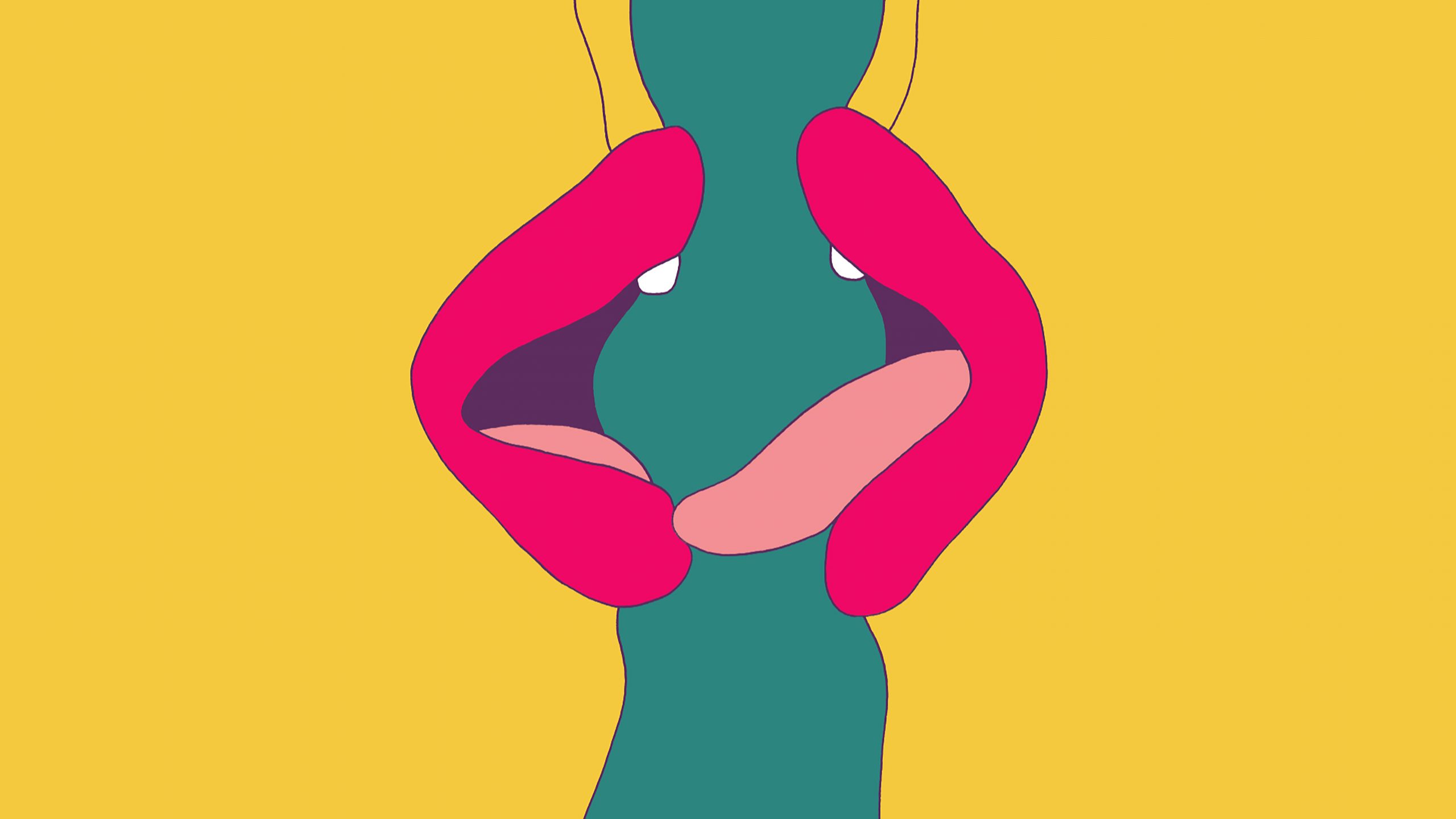
In Summer’s Puke is Winter’s Delight – the most aurally visceral of all the films – Sawako Kabuki shares a nauseating tale of self-abuse. The repeated sound and flashes of vomiting gives the sense of the character going through a difficult period, from one season to another, where they are trying to make themselves thinner to please their lover. The post-coital judgement, the pinch of bodyfat, in an intimate, unclothed moment, catalysing the attempt to become more desirable. Sawako shows us the characters nakedly fucking (as is a signature of her work) transforming from one position to the next as the character becomes more and more skinny and unwell. It feels not so much an admission of shame, but more a cathartic retelling of a past period of one’s life, that embraces the messiness, the grossness, the carnal.
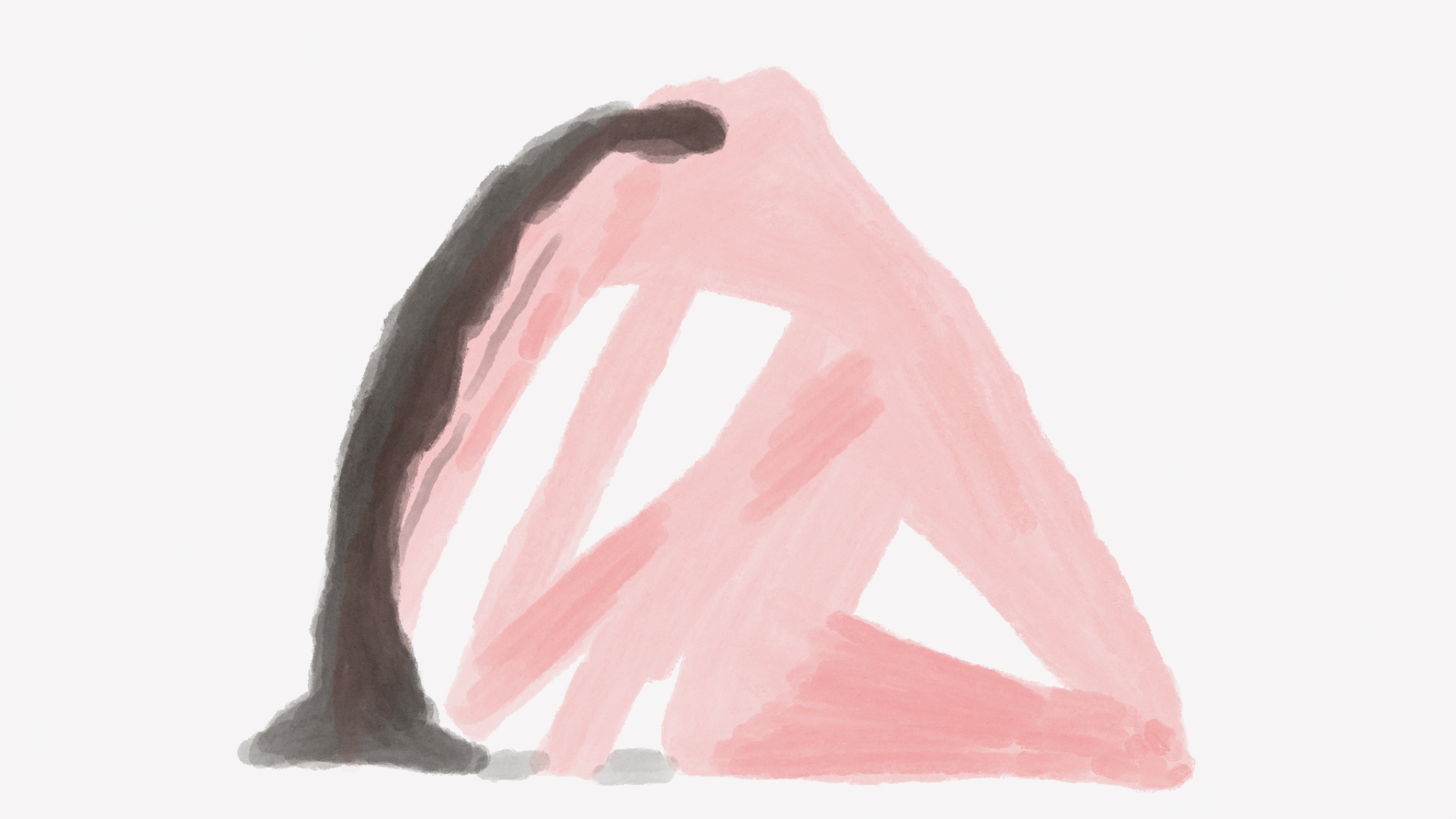
Lilli Carré presents the history of the naked women who can be found in famous artworks of our major museums and galleries in just two minutes with Glazing. The fleshy, blurry woman transforms through a series of rapid smear frames from one iconic pose to another. The sounds of the gallery crowd brings us into the space she inhabits. There is energy and violence in the way she moves from one position to another, contrasting with the delicate watercolours in which she is rendered by Lilli. Removed from the context of the artworks, she is given agency. She finally stands as herself, exposed and yet unashamedly owning the frame. The female returning the gaze, observing us, reclaiming her subjectivity.
With FRIED!, Lizzie Watts suggests how men too can benefit from feminist ideals. The shy and lonely Dev at first fears the older women he encounters. As with The Gift and The Boob Fairy there is magic that can be invoked by women. Lizzie similarly leans into devices of the horror genre, as we go with Dev into an unexpected meeting with two older lesbians. These mature women are a tribute to the feminist activists who came before, and embrace mysticism, ritual, sacred stones, and naked dancing. Whilst the women’s nudity is presented comically, it is also liberating and joyful. There’s also a nod to our pagan past with the inclusion of Sheela-na-gig iconography, a medieval symbol that has been reclaimed as signifying the power of female sexuality. Our hero Dev is brought to a spiritual awakening and new found confidence through learning from his elders the power in community and of letting go.
Y is a confessional film, with an artist recounting the relationship with the artist’s muse; she recalls the lines of her past lover’s naked body. Matea Kovač employs charcoal drawings, prints, paintings and fragments of real people, to take us through a raw and visceral recollection of what once was. We are looking at the female form through the eyes of an artist who is capturing the bare flesh on paper. The spoken words conflate the technical language of the study of anatomy and the intimate expressions of sexual desire. Much like Sawako Kabuki’s work, the memory is presented more as an observation than a site of shame or regret. Pages of hand-drawn vulvas made wet and dripping; the materiality of the film reflective of the physical site of desire for the filmmaker.
We finish with Rachel MacLean’s upside mimi ᴉɯᴉɯ uʍop, the fairytale of a girl corrupted by a magic mirror. With a nod to ‘Snow White’, the mirror here represents a smartphone, and the film is presented in a vertical, smartphone friendly format. The film critiques the pressure for young people to stay young and beautiful with the patriarchal voice of the mirror criticising mimi’s appearance. Rachel worked with teenagers in Scotland whose views fed into the work. She said on artnet: “You’d think that [smartphones] a medium which was so disembodied would allow you to kind of escape your body… But it’s almost had the opposite effect, to quite an intense degree, where bodies and physical bodies are seemingly more important than ever.” The older version of mimi, who appears more as the crone archetype, is free from the constraints of society. She tries to impress on the younger that being young and beautiful is not everything, and that invisibility is freeing. Much like FRIED! we are shown here that there is liberation in embracing the natural act of ageing.
As Jack Halberstam, in ‘Skin Shows’ writes: “In its various signifying forms, skin is a metaphor in horror for the screen, the place where the inside threatens to become the outside, and finally the place of suture that only barely conceals the mess of identity and subjectivity underneath.” With this screening we have probed under the skin to expose impassioned stories of people of all ages. Stories of shame, anxiety and insecurity, of the liberation of expressing desire and queerness, and of accepting our failures, our bodies, and our future selves.
Abigail Addison
Figures in Focus: Skin Shows screens at the Garden Cinema Sat 29 Nov and online from the same date (available for 48 hours)












Leave a Reply
You must be logged in to post a comment.