
Blurry, Fragile Windows On Fictive Realities??
Welcome to LIAF’s annual Abstract Showcase! “This is better than the Rothko gig”, says I.
True enough, on one reading probably a wildly misleading proclamation to kick this off with, but hang in there because it might just lead into a user-friendly enough amble through a couple of the thickets that surround the different ways we can approach and define abstract art in general – abstract animation in particular.
I had just walked into a massive exhibition of work by Gerhard Richter, probably on balance, my favourite artist. Staged in Paris’ Foundation Louis Vuitton, a hop-skip-and-bump or two from the Arc de Triomphe, it is an exhibition of staggering proportions spread across the entirety of the gallery. It’s on until early March next year, by the way – pick out some sensible shoes and just do it!
The last time I was here they were staging an equally comprehensive Mark Rothko exhibition and the vibe was very different. Almost impossible to move, almost impossible to gather any meaningful glimpses of any of the work, I lasted about 5 minutes before exiting through the entrance and headed for the gardens instead. These crush’n’coo, slow-mo stampedes aren’t worth the time and energy for your decrepit old correspondent; I don’t have a social media monkey on my back demanding a feed and the handful of friends I have would only be impressed if I could offer up a commentary of the experience built around a narrative of having actually seen some of the stuff.
The Richter gig has an altogether different experience. There is room to wander and contemplate. Good times!! Ever the optimist, I had arrived prepped and ready to go in as much as I’d worked my way through a couple of densely constructed catalogues from previous Richter exhibitions I’d been to over the years. Top of that list is the “Panorama” catalogue put together for the Tate Modern’s excursion into all-things Richter back in 2012. Although neither definitive nor exhaustive per se, there is a quality, consistency and careful curated relevance to what has been included in the publication that makes it little short of a true touch-stone on the subject.
The reactions to abstract art (and abstract animation) don’t tend to use the defined trajectories that representational animation traditionally rely on to manage the traffic. Story, characters, well-crafted endings…. even if there isn’t a consensus on the quality of these qualities in any given representational film, there is an unchallenged assumption that they exist as component parts of the film around which to at least have the debate.
Naaaaart-saaa-much with the abstract stuff.
OK, but nobody comes to an abstract show expecting that. But there can be a more pliable grey aura that exists around an image that has – or MIGHT have – a certain degree of ‘recognisability’ to it. This isn’t true of all abstract animation but it’s surprising how often it sort of ‘pings’ as a factor…. the equivalent of watching your bag getting pushed off the main airport scanner belt into the siding for a closer inspection of its bona fides before getting handed back to you slightly ruffled after an encounter with a suspicious stranger.
And this is where Richter comes in. Richter sits at some pretty interesting crossroads of ‘art that is other than representational’….. ish.
Richter worked with representational imagery a lot; in the main, photographs that he took himself. But abstractionist by nature, he could never really just let the literality of these photographs rule the roost. Instead, they became a kind of stepping-off point for a process of abstractionising that took these images to varying degrees of recognisability. And it brings up the question of when precisely (or even approximately) did these images change teams…. was going to say “jump the shark” there but the boss informs me nobody knows what that means, except where I come from.
Thinking this through is one of the essential processes of contemplating a range of abstract animation I reckon. And Richter is here to help. Reverse engineering Richter’s ‘abstractish’ imagery back to its purely representational foundations might help energise a few of the under-exercised synapses that need to be fired up to properly interrogate what we’re seeing on the screen, particularly when we see something we think we recognise. It can be a process that the mind completes in a snap or it can take a more elongated amble through the cognitive wiring.
I’m aided greatly in this meander by a tattered copy of Dorothee Brill’s ‘Panorama’ essay, “That’s As Far As It Goes”.
I’m hindered somewhat in this meander by the sodden residue of a high school education that – at best – had never seen a lick of abstract art and would have written it off as ‘something my kids could do’ if it had been spotted. I knew their kids and not for the first time was their faith misplaced. Bitter, moi?
I’m aided greatly in this by having meandered myself through an early sub-career as a photographer who spent many hours trying ‘to do something a bit different’ with his photos.
And I’m aided greatly in THAT meander by not giving a fat rat’s packed lunch about my ever pirouetting moonbeams of analysis.
I’m hindered somewhat in this meander by harbouring an affliction that has me constantly changing my mind about how I feel and what I think about what I see in Richter’s work.
For better or for worse I’m going to lean into Brill’s essay and see if following her breadcrumbs leads me out of the forest or just back to the gingerbread house that I woke up in this morning.
She starts as she means to continue…. quoting Richer quoting Kurt Schwitters:
“Art is an archetype, as sublime as the godhead, as inexplicable as life, indefinable and without purpose.”
It’s a heck of a quote: not sure it really helps us here, but it’s a heck of a quote.
“The notion of the pictorial space as an illusory space that obeys laws known to us from first-hand experience allows viewers to construct a standpoint for themselves in relation to the painting,” she offers. The same thing stands for animation. “Of course, this presumes that the painting provides enough information to enable us to apply our usual sense of spatial order to the picture.” Ditto.
This is where so much of Richter’s practice is so illuminating. Whether it is his various series of ‘fogged’ photographs, some of his glass commissions that insinuate flags or religious iconography or his ‘sculptural’ pieces that look a bit like furniture but are ‘paintings’ delivered on a horizontal plane, there are whole swathes of his work that have not taken their inspirational source into the fully abstract zone.
“This idea presupposes that the pictorial space can be viewed as a continuation of real space,” offers Brill. “That is to say, in our mind’s eye there appears to be a spatial connection between the fictive pictorial space and the real space”.
Brill summarises this as “a window on a fictive reality”. I wish I’d come up with that!
The confounding – or reassuring – news is that every window is different, every person looking through it equally so. And the light is always changing; the view is seldom the same any two times. So our grasp of – and on – an abstracted image we believe could have a basis in the representational changes as we change….. and if you’re anything like me, it changes every time you look at it.
And that is why you should look at it often and never stop looking, nor settle on a closed argument. When you do that, my high school has a job for you. You bring everything of you to this never-ending conversation – and in that we may have just stumbled upon one of the great reasons for this kind of art existing in the first place.
Richter – and Brill – put it better. “I don’t mistrust reality, of which I know next to nothing,” says Richter. “I mistrust the picture of reality conveyed to us by our senses, which is imperfect and circumscribed.”
Brill follows up; “Thus reality is not less to be doubted than the picture we have of it because we know more about it, but because we have access to it solely through the mediation of our processes”.
Our Abstract Showcase harbours some wonderful – and wonderfully diverse – examples of films in which many of these ideas immediately present themselves. Indeed the opening and closing films (The Self And Other by Chen Ma and Steen by Chin Yiu Mane Cheung, Pui Yu Sammi Tsui respectively) could hardly be better ‘same-but-different’ bookmarks for exploring abstract animation through this lens.
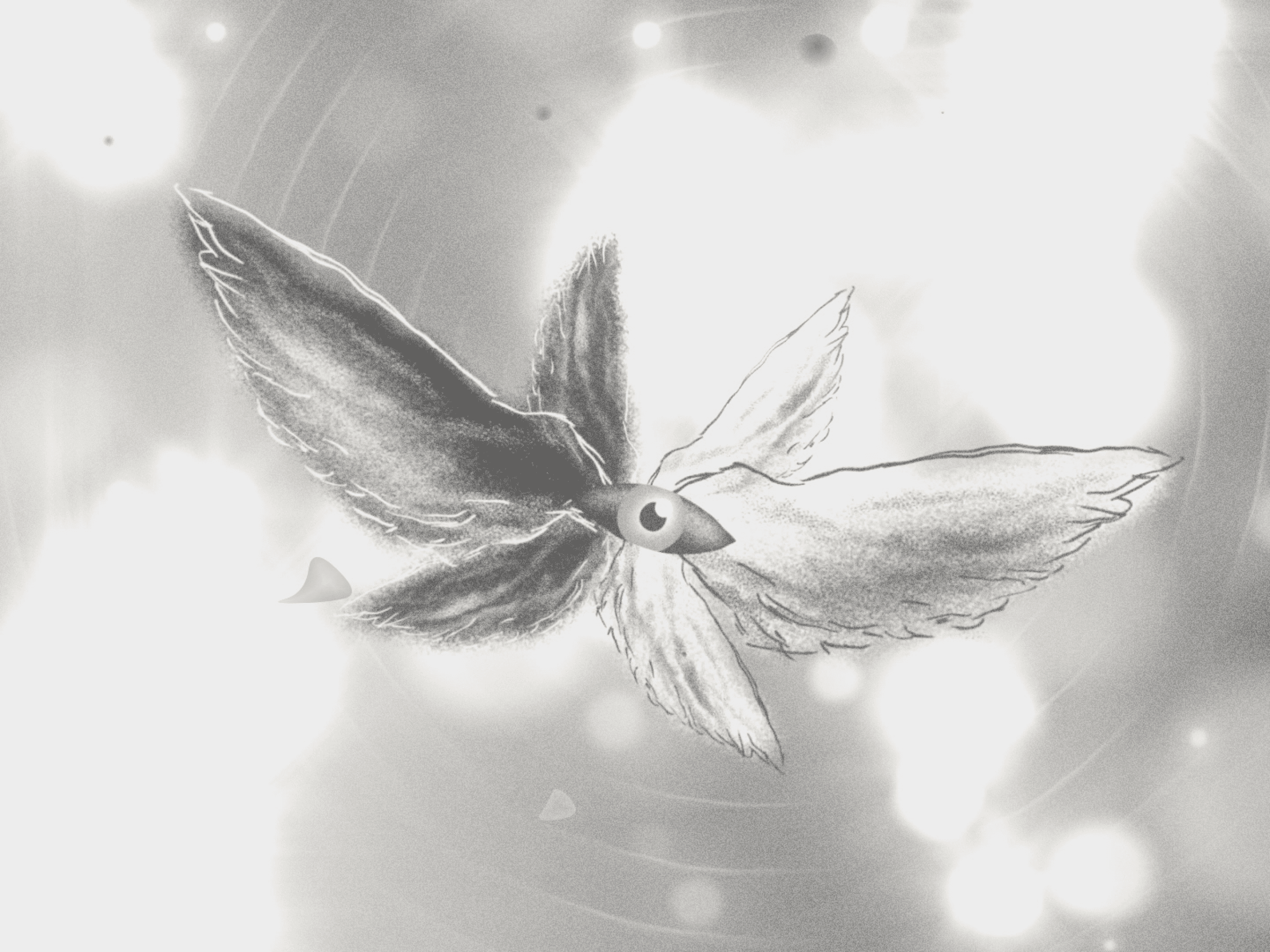
By most definitions that make any sense The Self And Other is obviously an abstract film. And yet, it is made up of images that are immediately recognisable – and nameable – to anybody. It has a deliberate four-act structure and it’s based on a Jean-Paul Sartre play called “No Exit”. Perhaps oddly, the very first deep-down reaction it sparked in me were none of the above but some kind of fuzzy DNA match with the “Coloured Rhythm” series of paintings done by Leopold Survage way back in 1913. Survage painted them with the specific purpose of having them filmed so they would become an animation but his lack of access to cameras and the arrival of WWI put paid to those ambitions. Most of the surviving paintings are held in New York’s MOMA and it wasn’t until the early 2000’s that somebody thought to finish the job and have them made into a film – of sorts. The immediate recognisability of the geometric shapes that populate the film almost immediately transcend their normal representational labels but because they never become something we would read as traditional characters (even though that’s sorta’ what they’re doing) we quickly find ourselves experiencing them as expressions of movement that reach out for a quizzically emotional reaction rather than as characters we can interrogate with language.
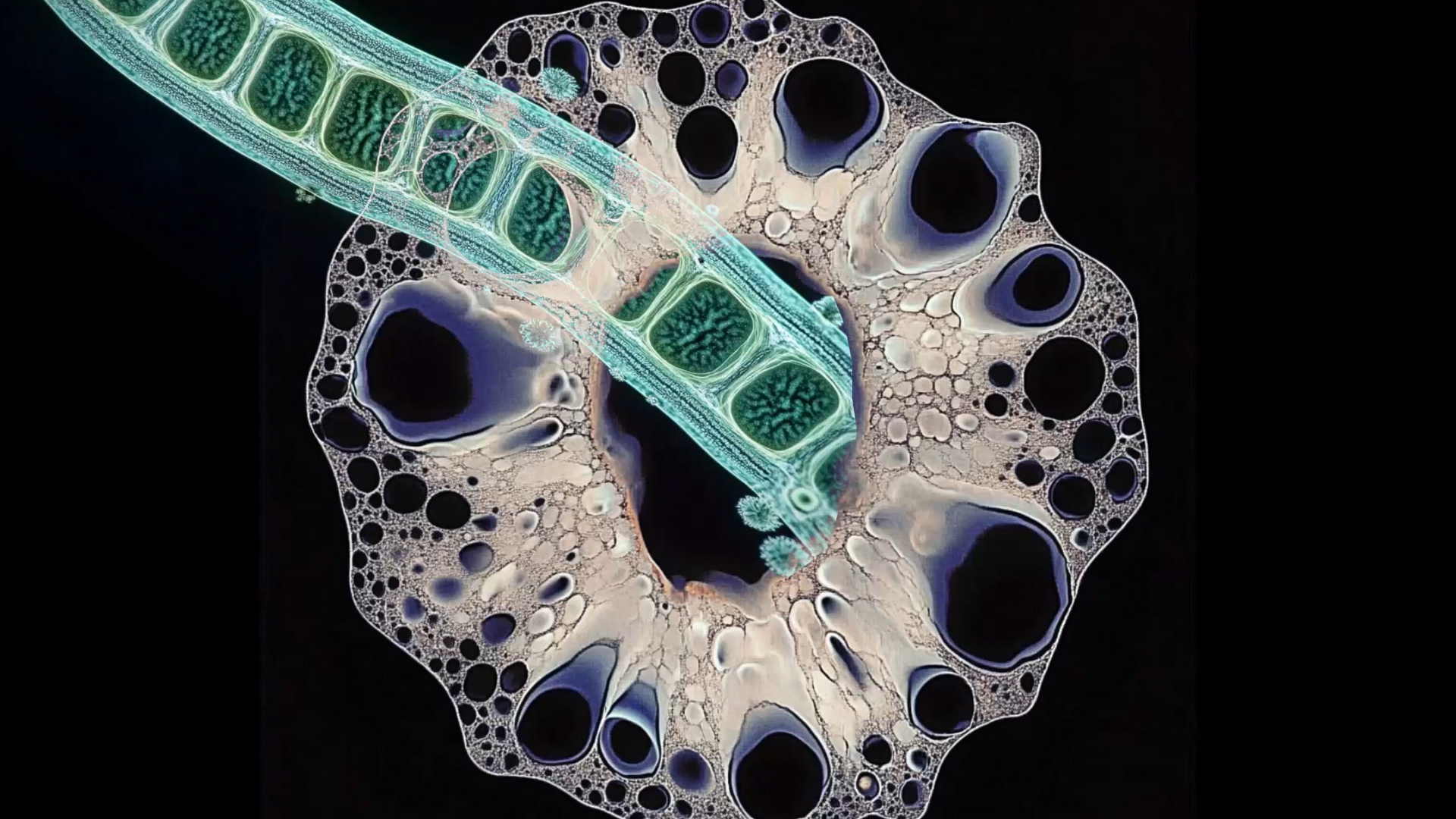
In closing the program, Steen is doing much the same thing but coming at it from the completely opposite direction. The animators have a self-confessed obsession with celebrating the microscopic and thus Steen transports us into the tiniest of worlds…. that of the cells and organisms that we live amongst but cannot see. They have these ‘creatures’ trying to tell us something and showing us how they interact with each other in their worlds but we have to take the filmmaker’s word for it that this is what they look like; and much of the impact of the film hinges on that connection to the real.
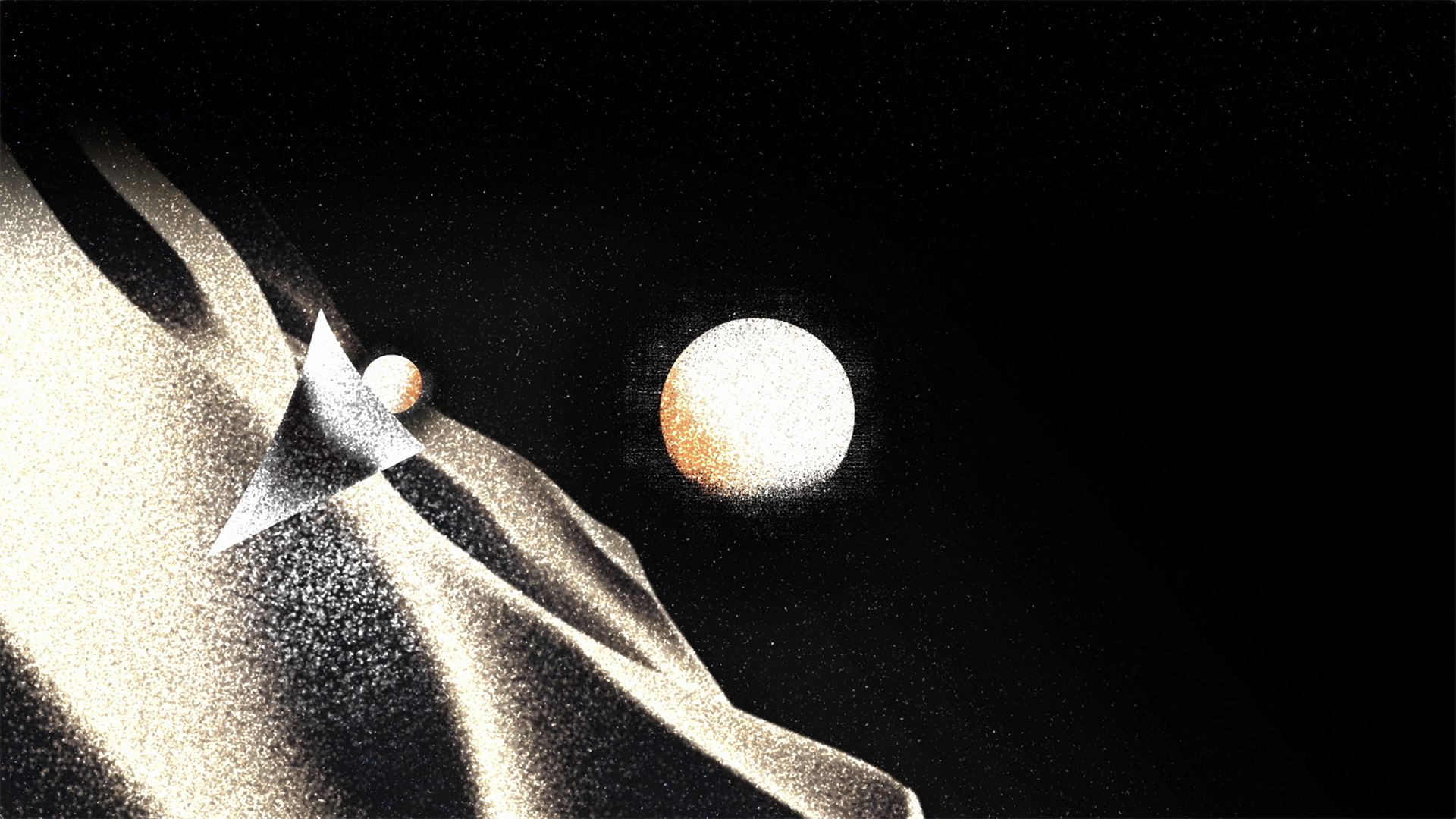
A number of other films in the programme are on the same dance card. From the very beginning Kepler-891c by Kwan Yau Tse pipes in a solid visualisation of a kind of landscape any of us would immediately recognise. Hitting us with a desert or lunar landscape all rendered out with a gloriously stark elegance, the film also immediately becomes not about the imagery that you can see (and recognise) but the ‘empty’ space that’s holding it all together, the shape of which is never defined nor settled – abstract, in other words. And it is this space which plays most viscerally and most in sync with the evocative soundtrack that has been constructed to nail down the prime immediacy of the film’s ‘message’.
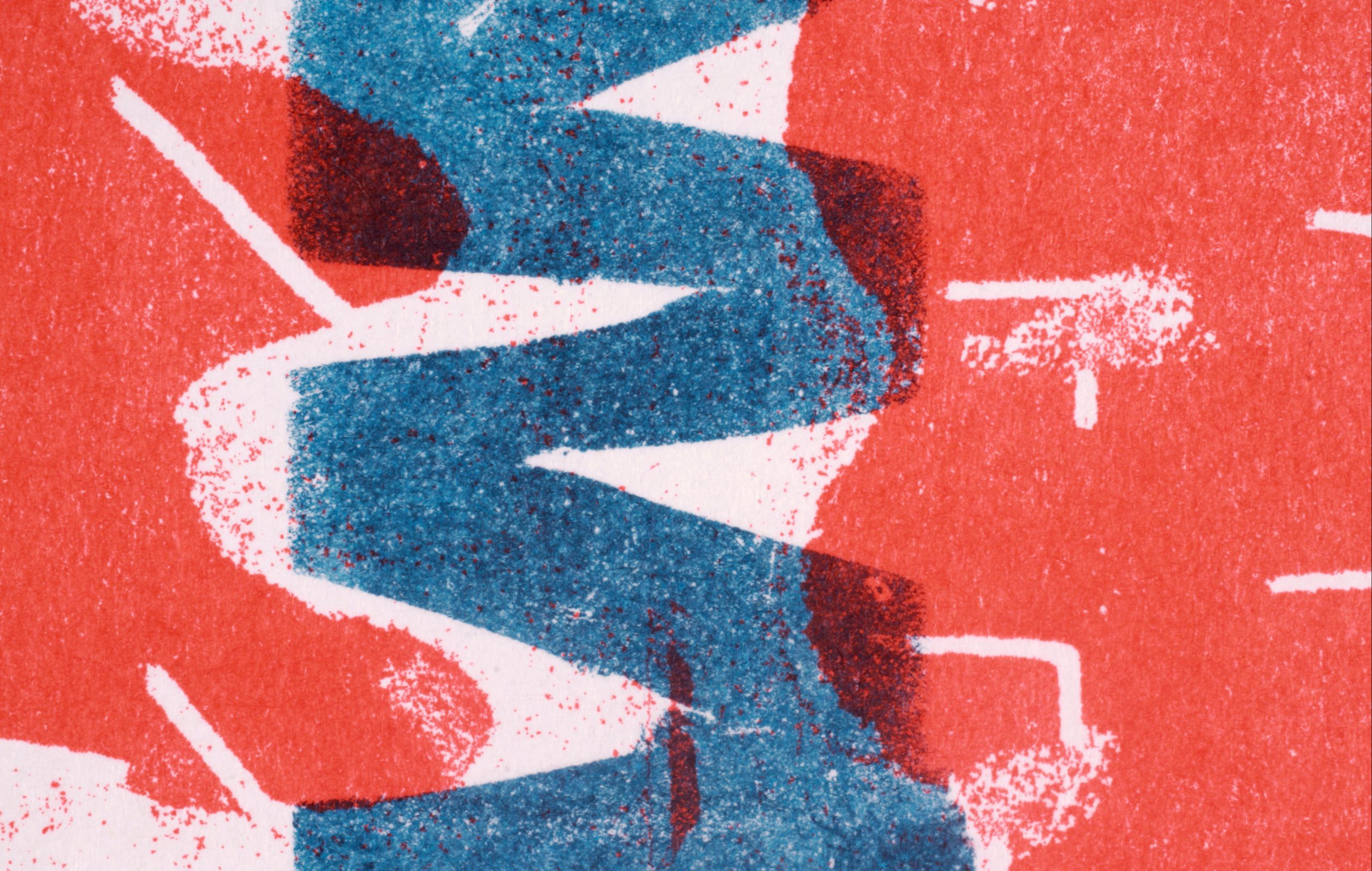
In Toil And Spin, Maureen Zent takes us on a journey of the non-physical, invoking the weightless, formless swirls of sleep-states, the ethereal realms of memory and the amorphous and invisible processes of memory-making. But to do this she deploys decidedly weighty and viscerally identifiable objects. This isn’t the contradiction it may seem; it comes from how certain very-real, very-physical objects make her feel and how her senses react to them. “Increasingly I’ve found myself admiring the way abstract sculpture changes the space in which it’s situated and the way it changes how I feel in that space,” she explains. “As a stop motion artist I don’t work in three dimensions but unlike most sculptors I employ the element of time”.
Of course, there are numerous films in this year’s Abstract Showcase that are constructed of the purely non-representational. Space (and the patience of the reader) does not allow a full roster call but a couple are worth pointing out as we bring the curtain down on this chat.
How lucky are we to be imbued with a capacity to enjoy, to practice and to even develop ‘play’. It’s a curious thing and in its own way an experience and a need shared by any number of living creatures. Humans, though, (can) bring a complexity and a joyousness to it that other creatures can’t muster. And for the smarter among us we can study, learn from and express our sense of play in infinitely unique ways. Sabrina Schmid’s new film Play chases and, for two exuberant minutes, translates the invisible sense of play into a visuality that dances for us before our very eyes. I saw this premiere in Melbourne earlier in the year and it seemed to come forward out of the screen and fill the room.
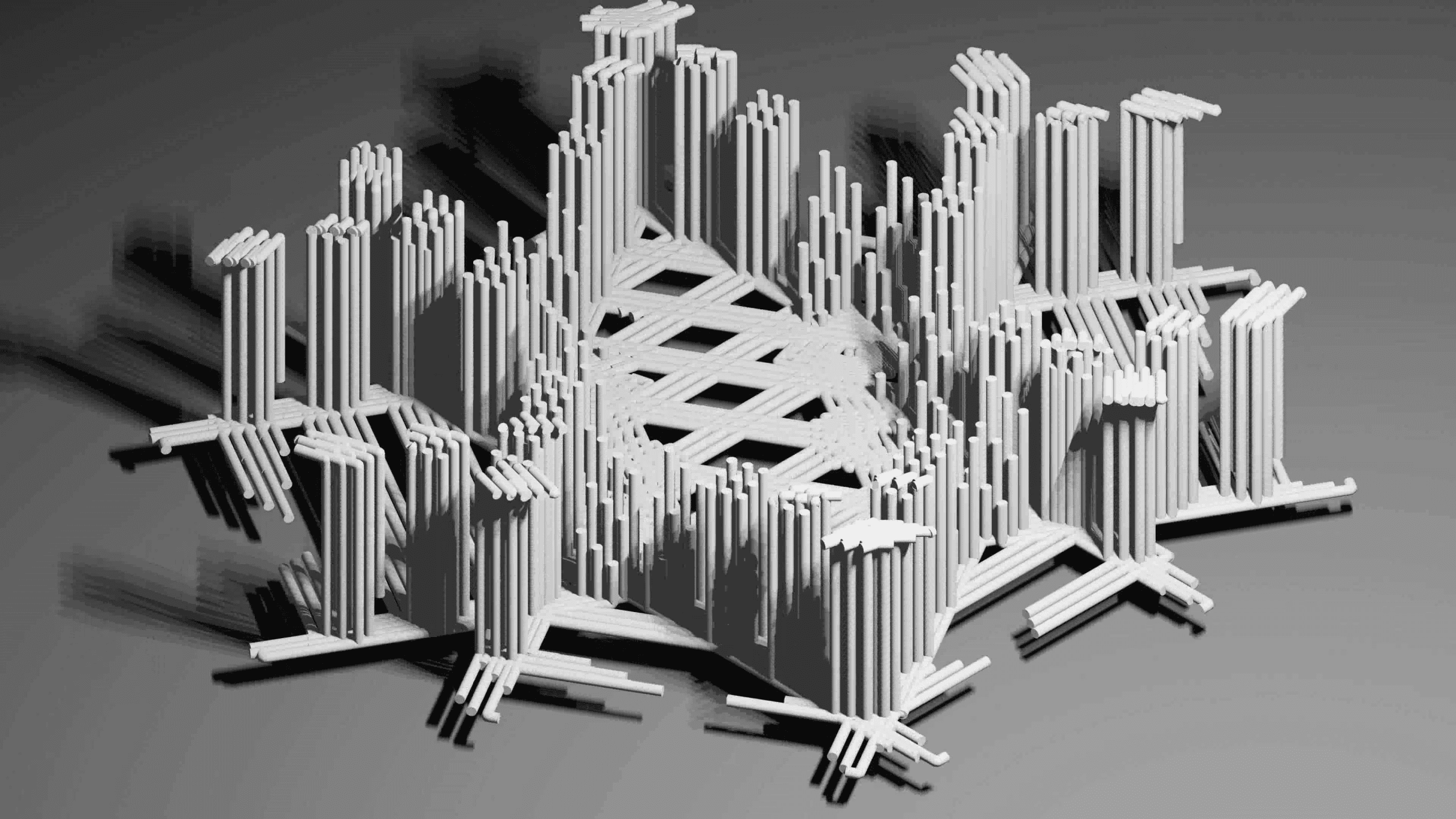
And a new film by master animator Larry Cuba requires a mention. Cuba has been doing this a long time and can justly be described as a true pioneer of computer animation. He has worked with John Whitney Sr, arguably the godfather of computer animation; he created one of the first true CGI animated sequences seen in popular culture (the visualisation of the pilot’s briefing in the original Star Wars) and his earliest films such as Calculated Movements (1985) represent a kind of source code for his latest, titled Simple Random Walks; this source code represents itself not just in the way the film looks but in the very blueprint of its construction.
As time and space run out on this, right on cue, an email drops into my in-box. The author shall remain unnamed to protect the innocent but be sure that it is from an inestimable source with a lifetime of animated acclaim behind her.
“Decoding abstract animation……?” she starts. “I would say it must have disciplined choices to give a structure, otherwise it is a doodle. That’s what I’ve learned from painting anyway.”
That’s definitely worth lunch!
Malcolm Turner
International Competition 1: Abstract Showcase screens at The Garden Cinema Sat 29 Nov and online from the same date (available for 48 hours)











Leave a Reply
You must be logged in to post a comment.