
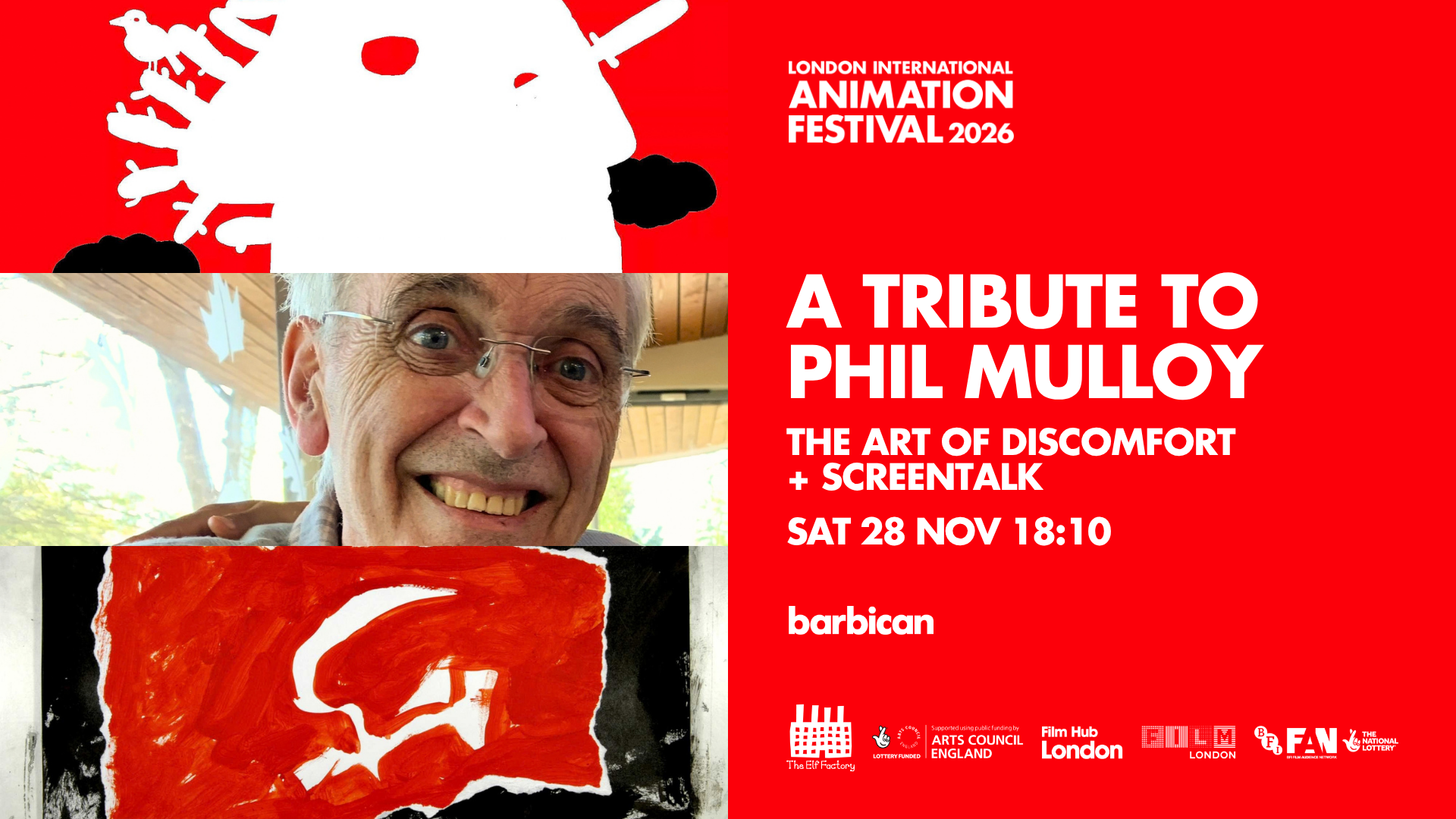
There’s a story, a parable of sorts – you might have heard it – that goes a little like this: we all die three deaths. The first is when our breath fails us, the second when we are bid farewell and cast to whatever rest has been assigned. But our third and final death occurs only when our name is spoken for-the-very-last-time.
Phil Mulloy has quite some time to go in that case – and good, ‘coz we’ve never needed him more and he’s never been so relevant.
In a recent ‘bio’ of the Velvet Underground, Bono described Lou Reed’s songs as being like “helium-filled metal balloons, never weighed down by their subject matter”. The prolifically inexhaustible music documentarian, Jan Younghusband, said Reed’s songs told us “that the wall we can all feel up against is actually a door”. I put a ring around both of those quotes because they seemed like a perfect way to describe Phil’s work.
Phil Mulloy. An artist of course, an animator obviously! BUT… but… an energised navigator of our darker angels, sometimes corralled long enough for us to ponder, sometimes eviscerated and flung back at us with enough force to feel the sting. Phil was – and had – a voice. What his films lacked in subtlety they made up for with a lack of subtlety.
The complexity came in the way the ideas contained within them intertwined with the fractured, contradictory, unpredictable, ever-changing human psyche. T.S. Eliot once wrote of what he called ‘metaphysical poets’ that they “possessed a mechanism of sensibility which could devour any kind of experience and form them into new wholes.” This strikes me as a pretty good description of the DNA of many of Phil’s films.
As often as not, his films often cast before us a roughly hewn topography of violence, maleficence or the consequences of wilful social manipulation splashed and thrashed onto our screen with what felt like a graphic, heated impatience. But the real beating heart of these films was really Phil’s capacity to act as something akin to what Proust described as “our intuitive radiographer”. This allows a kind of gamma piercing that reveals not so much where the heart is located beneath an otherwise opaque skin but what’s actually IN that heart.
Picasso was known to passionately argue that art “was not to decorate apartments but [be] employed as an instrument of war.” A legend has it that during WWII he was visited in his Paris studio by the SS who – upon casting eyes on his anti-war painting ‘Guernica’ – was asked “Did you do that?”, “No,” said Picasso, “you did”. Given that the SS weren’t famous for absorbing critiques of their work, the fact that Picasso lived well into the 1970s suggests this story is more myth than reality but it illustrates a wonderful point about the unique power of art is to not just portray war but to discuss it.
Austrian composer Arnold Schoenberg, a kind of punk classicist who opened up the pathway to musical atonality, defined art as “the cry of despair of those who experience the destiny of mankind”. That’s lurching toward the ‘operatic’, shall we say, but it makes the point that one role of art is to not just tell us what’s wrong but to show us ways to feel about it that make us wonder if there is a better way. Others would know far better than I, but Phil didn’t strike me as somebody that spent that much time in a state of despair but he knew what the problems were, he was impatient with our [in]ability to grasp them because he could imagine remedies and he knew how to present them in ways that the simplest among us could grasp. This-is-not-easy-to-do: or at least not as easy as Phil seemed to think it was.
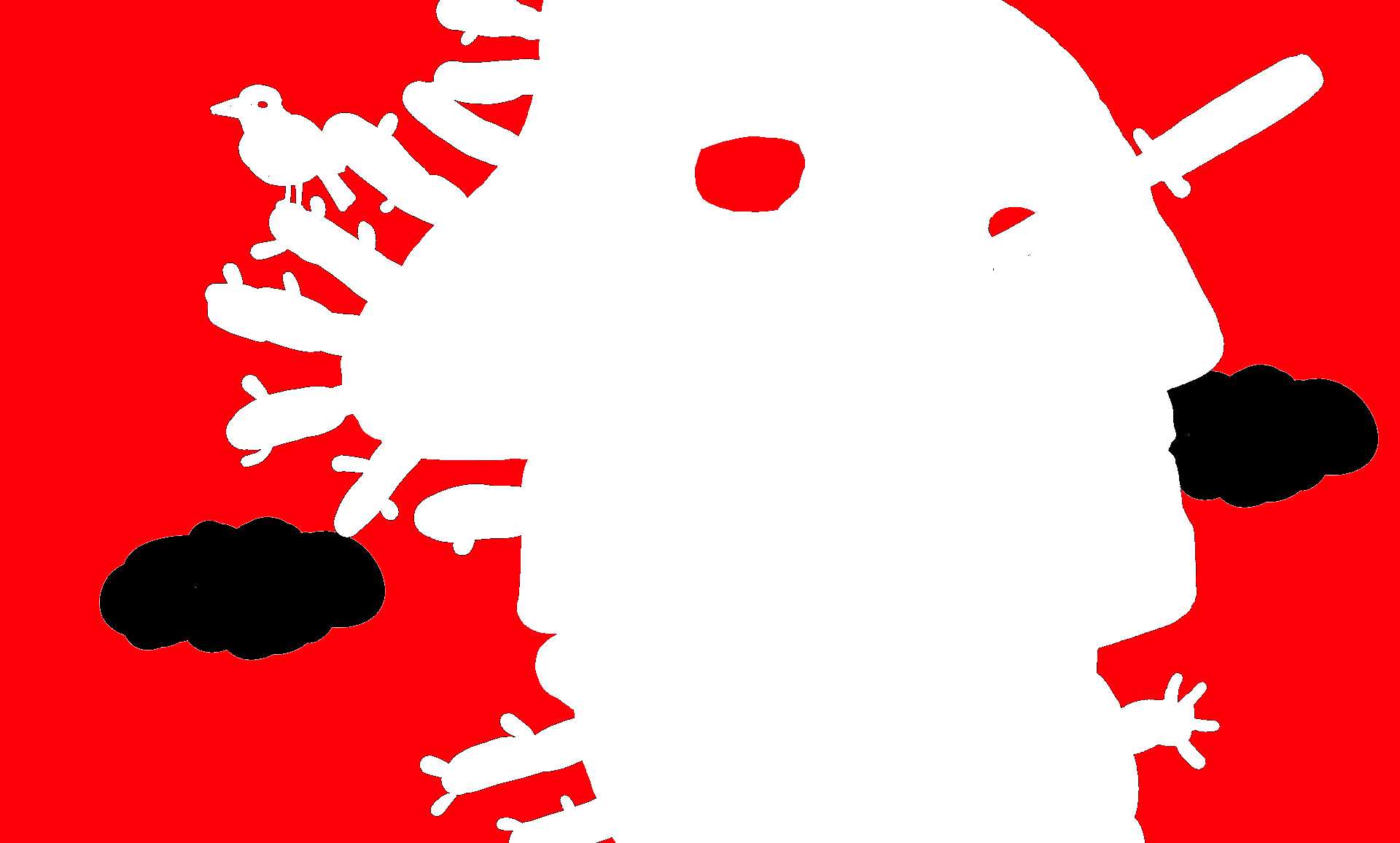
My own encounters with Phil were numerous, often hilarious and always memorable. They began as he was working on The Intolerance Trilogy and at successive Stuttgart festivals back in the day he walked me through the making of those films. For an animation curator only beginning to come up to speed this was pure gold. At another festival we’d been seated at opposing sides at the top end of a table on a river boat going on a lunch cruise courtesy of our hosts. Realising my position was taking the direct sun he offered to swap positions back and forth so as to share the glasshouse-style discomfort. One night at the Curzon Cinema he pushed me to explain why I hadn’t selected the first ‘Christies’ feature and when I finally relented and said I just found the structure of it a bit episodic for what I tended to programme into the feature slots in my festival he slapped me in the face – and laughed. Several years later at another festival (HAFF I think) he pointed me out as one of the few festival directors anywhere to “have the guts to select the last three features I made”. I remember searing, beyond-comedic takedowns of ‘Watership Down’ (which I didn’t take entirely seriously) and piercing observations about a range of politicians (which I did). Most of all I remember an aura of canny, wilful, contained mischief that radiated out of Phil – it made him the smartest guy in the room.
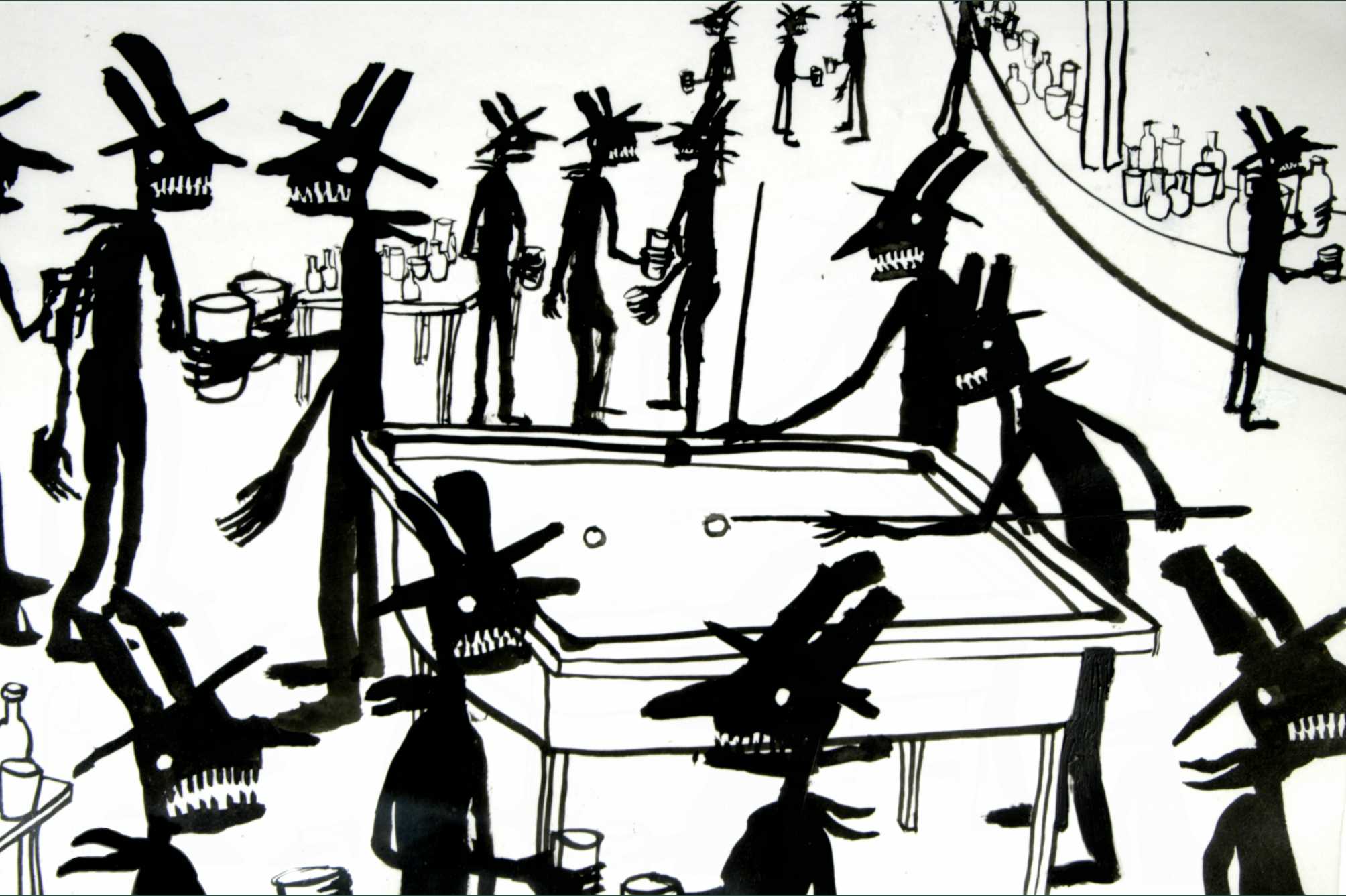
Croatian animator, Daniel Šuljić, also first encountered Phil’s films at the Stuttgart festival back in 1994 when he was a student. “They screened a special retrospective programme including the Cowboys series, and I immediately liked his raw and minimalistic yet very cinematic style of filmmaking,” recalls Daniel. “That was really something different, almost like a one-man punk movement in animation.”
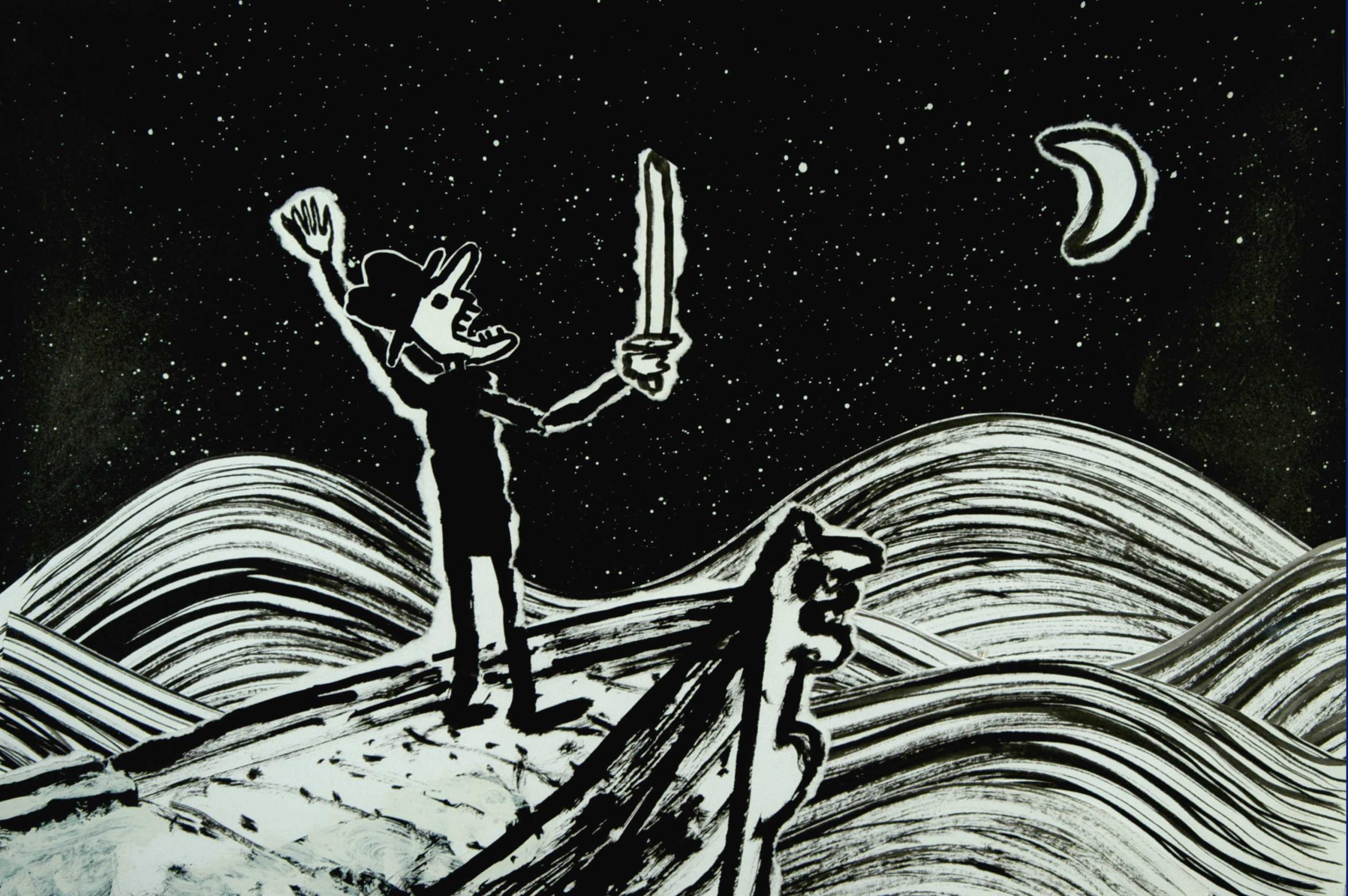
Four years later, Daniel had his own film, The Cake And The Sun, Salt And Sea, screening in competition at Stuttgart and got to meet Phil whose film Wind Of Change had also been selected. Daniel remembers it as a meeting of minds. “I have to say we were immediately on the same wavelength. I felt good in his presence, sharing many talks and drinks over the decades. It was always a pleasure.”
Fast forward a decade+ and Daniel is a key figure in Animafest Zagreb, one of the oldest and most respected animation festivals in the world. In 2024 the festival presented Phil with a Life Time Achievement Award and Daniel has especially fond memories of Phil attending the festival and taking part.
“He was simple, approachable and just Phil, as always,” remembers Daniel. “Accompanied by Vera. We did several things: a retrospective, a masterclass (which he was not very fond of doing), and one of the nicest things turned out to be the exhibition in Galerie Kranjčar where he exhibited giclée prints from his films.
“Great memories, just two years ago…”
Yeah!
There’s plenty of writing about Phil and his films out there – much of it pretty good. It doesn’t seem like a good use of time or space here to add any more pontifications on specific films to the digi-reams – especially when a good number of those films will be on the big screen for all to see and calculate for themselves. Chris Robinson’s recent book Raw Outrage: The Films of Phil Mulloy holds an especially essential position on the totem though and is highly recommended. It’s a great title although I once saw Phil react fairly sharply to a questioner who put it to him that his films about religion reflected his ‘personal outrage’ about organised religion. He was often referred to as the ‘enfant terrible of British animation’. It was a tag he seemed to wear lightly enough – perhaps because it only wove a certain and fairly singular filament of truth. In person he was anything but and, by and large, I think he wanted his films to enlighten rather than lecture – he didn’t strike me as someone with a passion for sermonising. In fact he said that he didn’t actually mind religions, “I just don’t have to believe in one.”
Even so, a couple of those films might have delayed his customs inspection at the pearly gates and if some kind of work-day penance is required to smooth the ledger I’d like to think that maybe they’ve found a job for Phil organising the thunder.
Malcolm Turner
A Tribute to Phil Mulloy: The Art of Discomfort + Screentalk screens at the Barbican Sat 28 Nov.














Leave a Reply
You must be logged in to post a comment.